- Tel: +86-15305875100
- E-mail: [email protected]
- Please contact us if you have questions.
CONTACT US


 English
 Español

Industry News
Jul 31,2026
Where is Industrial Switch Panel Commonly Used
Industrial switch panels have quietly become a pretty essential piece of how modern equipment actually gets managed day to day. Walk into most factories, workshops, or industrial facilities, and you'll notice operators need some straightforward way to actually control the machines they're working with. That's really where a switch panel comes in — it's the direct link between the person and the equipment, letting workers handle whatever operations come up during a normal shift.
Sure, a switch panel looks tiny next to the massive machinery it's often controlling, but that size difference doesn't really reflect how much it matters. Get the panel design right, and operating equipment suddenly feels a lot less complicated — the whole workspace tends to run more smoothly and stay better organized as a result.
Not every industry needs the same thing from these panels, either. Some facilities are using them mainly for production equipment, while others need them for transportation systems, energy setups, or more specialized machinery entirely. Knowing which application area actually applies helps buyers narrow down not just the right product, but the right supplier to go with it.
What Is an Industrial Switch Panel Used For?
A switch panel is a control interface used with industrial equipment and systems. It usually contains different control elements that allow operators to manage machine functions.
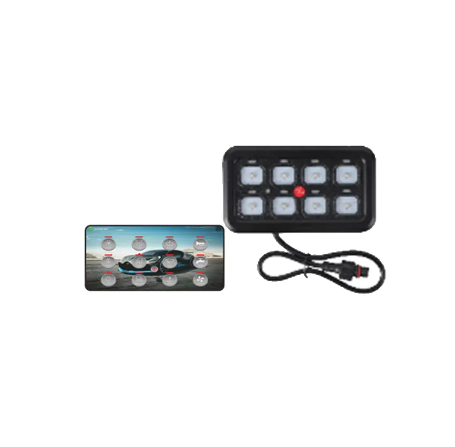
In a working environment, operators often need to start equipment, stop operations, check machine conditions, or make adjustments. A switch panel places these actions in one accessible area.
Compared with ordinary control interfaces, switch panels are designed for professional environments. They need to match the equipment structure and support regular operation.
The main purpose is not only controlling machines. A well-planned switch panel also improves the interaction between workers and equipment.
For different applications, manufacturers may adjust the panel design according to:
- Equipment type
- Installation location
- User operation habits
- Working environment
This flexibility makes switch panels suitable for many industries.
Why Are Industrial Switch Panels Widely Used in Factories?
Factories are one of the most common places where switch panels are installed. Modern production lines often include multiple machines that need regular operation and management.
In manufacturing facilities, workers may use switch panels to control:
- Processing equipment
- Assembly machines
- Packaging systems
- Production line equipment
- Material handling devices
A factory environment requires clear operation methods. Workers need to understand machine status quickly and respond to different situations during production.
A suitable switch panel helps organize control functions in a practical way. It reduces unnecessary operation steps and allows workers to focus more on production tasks.
Many manufacturers also provide customized panels because each factory may have different equipment layouts and control requirements.
How Do Industrial Switch Panels Support Automation Equipment?
Automation has changed a lot about how industrial processes actually run. Machines are handling more and more tasks on their own these days, needing less manual input than they used to — but somebody still needs to be there controlling things, even if it's just to step in when needed.
That's basically where switch panels come in. They act as the interface connecting operators to whatever automated system they're working with, giving workers a way to actually communicate with the machines and manage how they function.
In a lot of automated setups, these panels end up handling things like:
- Turning equipment on and off when needed
- Fine-tuning how things are actually running
- Keeping an eye on machine conditions in real time
- Switching between different working modes depending on the task
How the panel is designed really does shape the whole experience of using it. If the interface ends up too complicated, operators end up struggling more than they should. But when it's designed clearly, day-to-day work just tends to flow a lot better.
As more industries keep bringing automation into their operations, it makes sense that demand for practical, easy-to-use control panels keeps climbing right along with it.
Where Else Can Industrial Switch Panels Be Found?
Switch panels are not limited to factory production areas. They are also used in many other industries where equipment requires regular control.
Some common application areas include:
| Industry | Common Applications |
|---|---|
| Manufacturing | Machine operation and production control |
| Agriculture | Farming equipment and processing systems |
| Transportation | Vehicle and equipment control |
| Energy | Facility management systems |
| Water treatment | Pump and process control |
Each industry has different operating conditions. A panel used in a factory may have different requirements from one installed in an outdoor system.
Because of this, buyers usually need to consider the actual working environment before selecting a product.
How Are Industrial Switch Panels Used in Heavy Equipment?
Heavy equipment often operates in demanding environments. Operators need reliable control methods that are easy to understand during daily use.
Switch panels are commonly used in:
- Construction equipment
- Industrial machines
- Large processing systems
- Special-purpose equipment
For these applications, the panel design needs to match the equipment structure. The location of switches, indicators, and other controls can affect the user experience.
Manufacturers often work with equipment companies to develop suitable designs. This cooperation allows the panel to fit better into the overall machine system.
A customized approach is especially useful when standard products cannot fully meet project requirements.
What Should Buyers Consider When Choosing Industrial Switch Panels?
Picking out a switch panel really shouldn't just come down to how it looks or what it costs. Buyers actually need to think through how the panel will be used day to day, and whether the supplier they're considering can actually keep up with what they need.
A few things worth weighing here:
- What kind of environment the panel will actually be working in
- Whether the manufacturer can customize things when needed
- How much hands-on manufacturing experience they've got
- How seriously they take quality control
How smoothly communication actually goes with them
The working environment probably matters more than people initially think. A panel built for indoor equipment isn't necessarily going to hold up the same way outdoors, and specialized machinery often needs its own design considerations entirely.
It also helps a lot when buyers are upfront and clear with manufacturers from the start. The more detail they share about what the equipment actually needs, the easier it is for suppliers to come back with something that actually fits — instead of just offering something generic and hoping it works out.
A manufacturer worth trusting usually isn't just focused on cranking out product after product. They're also genuinely trying to understand how customers plan to actually use what they're building.
Why Is Customization Important for Industrial Switch Panel Applications?
Industrial equipment is becoming more diverse. Different companies often use different machines, production methods, and operating systems.
Because of these differences, customized switch panels are becoming more common.
Customization may involve:
- Panel layout adjustments
- Different control arrangements
- Specific appearance requirements
- Equipment-based designs
For machine manufacturers, a customized panel can help create a better connection between the machine and the operator.
A supplier with customization experience can provide more flexibility during product development. This is valuable for companies working on special industrial projects.
How Do Manufacturers Improve Industrial Switch Panel Production?
Behind every switch panel is a production process that involves design, material selection, assembly, and inspection.
Manufacturers continue to improve their production methods to meet changing customer needs.
Many factories focus on:
- Better production planning
- More efficient communication
- Stable manufacturing processes
- Careful product inspection
Quality management is an important part of this process. A consistent production method helps reduce problems and supports long-term cooperation with customers.
For buyers, understanding a manufacturer's production ability can provide useful information when choosing a supplier.
How Is the Future Demand for Industrial Switch Panels Developing?
Industrial environments continue to change. Companies are looking for equipment solutions that are easier to manage and more suitable for different applications.
This trend is creating new opportunities for switch panel manufacturers.
Future market demand is likely to focus on:
- Flexible product designs
- Improved user experience
- More customized solutions
- Better cooperation between manufacturers and buyers
Industrial switch panels may remain a small part of a larger system, but their function connects people, machines, and production processes.
As industries continue to improve equipment management, these control interfaces will continue to support different working environments.
Related Products
Looking For Business Opportunity?
Request for a call today

No.128, Qianjin Road, Qianfeng Industrial Zone, Tangxia Town, Ruian, Zhejiang, China
-
-
Sophia Ye
-
Phone: +86-15305875100
-
WhatsApp: 15305875100
-
Email: [email protected]
-
- Mobile Terminal
Copyright 2024 Zhejiang Xiangrui Auto Electric Co., Ltd.

Relays And Modified Parts Factory
