- Tel: +86-15305875100
- E-mail: [email protected]
- Please contact us if you have questions.
CONTACT US


 English
 Español

Industry News
Aug 14,2026
Where Are Electric Solenoid Switches Commonly Used
Machines keep getting more connected, and demand for automatic control components has grown right along with it. Even products that look simple on the outside often have several control parts working together under the hood. Electric solenoid switches are one of those parts — small components that turn electrical signals into mechanical action.
They're not glamorous, but they show up everywhere: manufacturing equipment, vehicles, agricultural machinery, security systems, automated devices of all kinds. The applications span far more industries than the component's size would suggest.
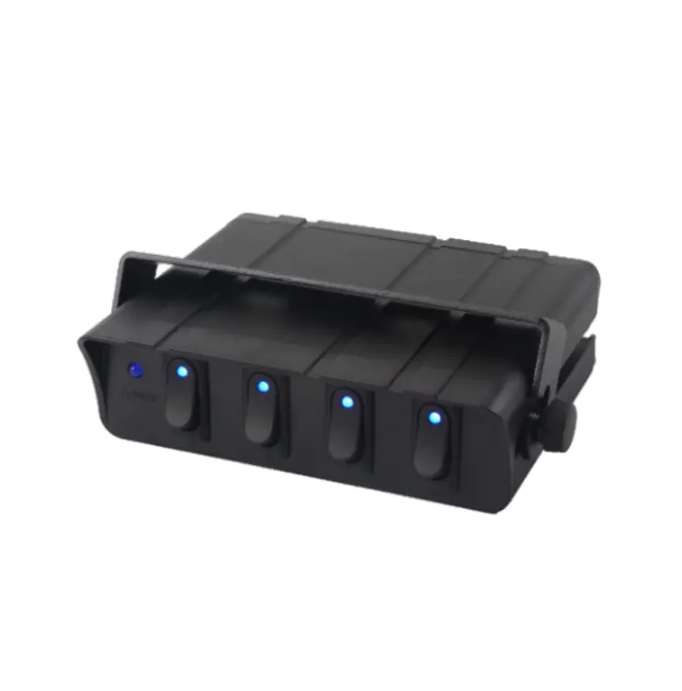
For equipment manufacturers, picking the right solenoid switch isn't a minor detail. It affects how smoothly a machine runs and how well different parts coordinate with each other — get it wrong, and the whole system feels off even if every other component is solid.
There's no single "standard" use case either. Different industries apply solenoid switches based on their own equipment structures and operating demands, which is part of why the component has stayed relevant across so many sectors.
What Is an Electric Solenoid Switch and Why Is It Used?
A switch is a component that converts an electrical signal into a mechanical action. When an electrical current reaches the switch, the internal mechanism responds and creates movement that controls another part of the system.
In simple terms, it works as a connection between electronic instructions and physical movement. A machine can send a signal, and the solenoid switch reacts by opening, closing, moving, or activating a related function.
This type of switch is useful because many machines require automatic operation. Instead of relying on manual control for every action, equipment can use electrical signals to manage different processes.
Common reasons industries use electric solenoid switches include:
| Reason | Description |
|---|---|
| Automatic control | Allows equipment to respond to electrical signals |
| Space saving design | Fits into different equipment structures |
| Simple operation | Supports straightforward control functions |
| Flexible applications | Can be used in many industries |
The growing use of automation has increased interest in these components. Equipment designers often look for reliable parts that can fit into different systems without creating unnecessary complexity.
How Are Electric Solenoid Switches Used in Industrial Equipment?
Industrial machinery is one of the biggest application areas for solenoid switches. Factories run equipment that needs repeated, precise movements — and that's exactly the kind of task these switches handle well.
In a typical production line, machines might move parts, control access points, or shift positions mid-process. Solenoid switches often sit inside these control loops, quietly doing the work.
You'll find them across:
- Production equipment
- Packaging machines
- Material handling systems
- Assembly equipment
- Automated processing machines
Take packaging equipment as an example. It needs accurate movement at specific stages — open, seal, shift, repeat. A solenoid switch helps control those individual actions so the machine follows its intended sequence without drifting off track.
Space is another factor. Industrial machines are often packed with components, so a compact control solution makes the whole design easier to manage — less wiring clutter, fewer integration headaches.
The exact role varies by machine. Some use solenoid switches purely for movement control; others build them into a larger electrical control structure where they're just one piece of a bigger system.
Where Are Electric Solenoid Switches Used in Automotive Systems?
Vehicles include many systems that depend on electrical control. From starting functions to access systems, different parts of a vehicle require components that can respond quickly to electronic commands.
Switches are commonly found in automotive applications because they can connect electrical signals with mechanical operations.
Typical uses include:
| Automotive Area | Application |
|---|---|
| Starting systems | Managing starting-related functions |
| Door systems | Supporting locking mechanisms |
| Transmission systems | Assisting mechanical control |
| Safety equipment | Controlling certain vehicle functions |
The automotive industry continues to introduce more electronic features into vehicles. This change has created greater demand for compact and practical control components.
Vehicle manufacturers need parts that can work within complex designs. Solenoid switches are considered in many applications because they provide a simple method for controlling mechanical movement.
Beyond passenger vehicles, similar control concepts are also used in other transportation equipment. Different types of vehicles may require different switch designs depending on their structure and operating environment.
Why Are Electric Solenoid Switches Important for Automation Systems?
Automation has changed how a lot of industries run production. Tasks that used to need someone standing there controlling each step now happen on their own — machines just respond to electrical signals.
Solenoid switches fit right into that shift. They let equipment react to instructions without a person stepping in, converting a signal into actual movement.
Common uses include:
- Automatic production lines
- Sorting equipment
- Control devices
- Industrial robots
- Mechanical operating systems
What's worth noting is the scale of impact. One solenoid switch firing at the right moment can set off a much bigger process further down the line. Small action, larger consequence.
When engineers build equipment, components don't get chosen in isolation — everything has to work together. A control part needs to match the timing and logic of the whole machine, not just perform its own function well.
Smart manufacturing has raised expectations too. A part working correctly isn't enough anymore; it also needs to communicate properly within a connected system.
That's probably why solenoid switches have held their ground so long. They sit right where electronic control meets physical motion, which is exactly what automated systems depend on.
Can Electric Solenoid Switches Be Used in Agricultural Machinery?
Agricultural equipment has become more advanced in recent years. Many machines now include automatic features that make operation easier and improve working processes.
Switches are used in different agricultural applications where mechanical actions need electrical control.
Examples include:
- Irrigation equipment
- Feeding systems
- Farming machines
- Agricultural control devices
In farming environments, equipment often needs to perform repeated actions. Operators may need machines to control specific functions without manually adjusting every step.
Solenoid switches can be integrated into these systems to manage certain operations. Their use allows manufacturers to design agricultural equipment with more convenient control methods.
Different agricultural machines have different working conditions. Because of this, manufacturers usually consider factors such as equipment structure, usage environment, and product design before selecting suitable components.
How Are Electric Solenoid Switches Applied in Security and Access Equipment?
Security systems are another common home for solenoid switches. Access devices need controlled movement — lock, unlock, open, hold — and that requires components that respond reliably to electrical signals.
Electronic locks, security doors, and access systems all lean on this kind of setup.
Typical applications:
- Electronic locking systems
- Access control devices
- Security equipment
- Automated entry systems
The logic is straightforward. The system sends the correct instruction, the solenoid switch activates the mechanism, and access happens — no key, no manual latch, just electronics doing the work.
Smart buildings have pushed this further. As more entry systems go electronic, manufacturers keep looking for compact control parts that fit cleanly into tighter designs.
Security equipment doesn't leave much room for error, though. Reliability matters as much as convenience — a lock that hesitates or misfires isn't just inconvenient, it's a real problem. Solenoid switches get chosen here because they offer a direct, dependable link between an electronic command and the physical action that follows.
What Factors Should Companies Consider When Selecting an Electric Solenoid Switch?
Choosing a switch requires consideration of the complete equipment design. Different industries have different expectations, so the selection process may vary.
Several points can influence the choice:
Equipment Application
The intended use affects which type of switch is suitable. A switch used in industrial machinery may have different requirements from one used in access equipment.
Installation Environment
The location where the switch will operate can influence product selection. Designers usually consider available space and working conditions.
Product Compatibility
A solenoid switch needs to match the surrounding components. Proper coordination between parts can support smoother equipment operation.
Supplier Experience
Manufacturers often work with suppliers that understand different application needs. Good communication can make product development more efficient.
Future Maintenance
Companies may also consider long-term use. Components that are easier to manage and replace can be more convenient during equipment service.
The selection process is not only about the switch itself. It involves understanding how the component fits into the entire system.
How Is the Demand for Electric Solenoid Switches Changing Across Industries?
The market for control components continues to change as industries introduce new equipment designs. More manufacturers are adopting automated systems, and this creates new opportunities for switches.
Different sectors are looking for components that can support flexible equipment structures. This has encouraged suppliers to develop more application-focused solutions.
Several trends are influencing future demand:
More Automated Operations
Factories, transportation systems, and commercial equipment are becoming more automated. This creates demand for components that can respond to electronic control.
Increased Equipment Integration
Modern machines often combine mechanical and electronic functions. Components like solenoid switches need to work together with other parts inside these systems.
Wider Application Areas
The use of switches is expanding beyond traditional machinery. New equipment designs continue to create additional application possibilities.
More Attention to Product Adaptability
Manufacturers need components that can fit different product concepts. Flexible solutions are becoming more valuable during equipment development.
Electric solenoid switches continue to appear in many industries because they provide a practical way to connect electrical control with mechanical movement. From industrial machines and vehicles to security equipment and agricultural systems, these components remain part of many modern product designs.
Related Products
Looking For Business Opportunity?
Request for a call today

No.128, Qianjin Road, Qianfeng Industrial Zone, Tangxia Town, Ruian, Zhejiang, China
-
-
Sophia Ye
-
Phone: +86-15305875100
-
WhatsApp: 15305875100
-
Email: [email protected]
-
- Mobile Terminal
Copyright 2024 Zhejiang Xiangrui Auto Electric Co., Ltd.

Relays And Modified Parts Factory
