- Tel: +86-15305875100
- E-mail: [email protected]
- Please contact us if you have questions.
CONTACT US


 English
 Español

Industry News
Jun 12,2026
What Is a Marine Dual Battery Isolator and How Does It Work on Boats
A boat is a different kind of power environment compared to a car or a fixed electrical system. Once it leaves the dock, everything depends on what is already onboard. There is no quick backup plan if power becomes unstable. Because of that, how electricity is managed on a boat matters more than many people realize.
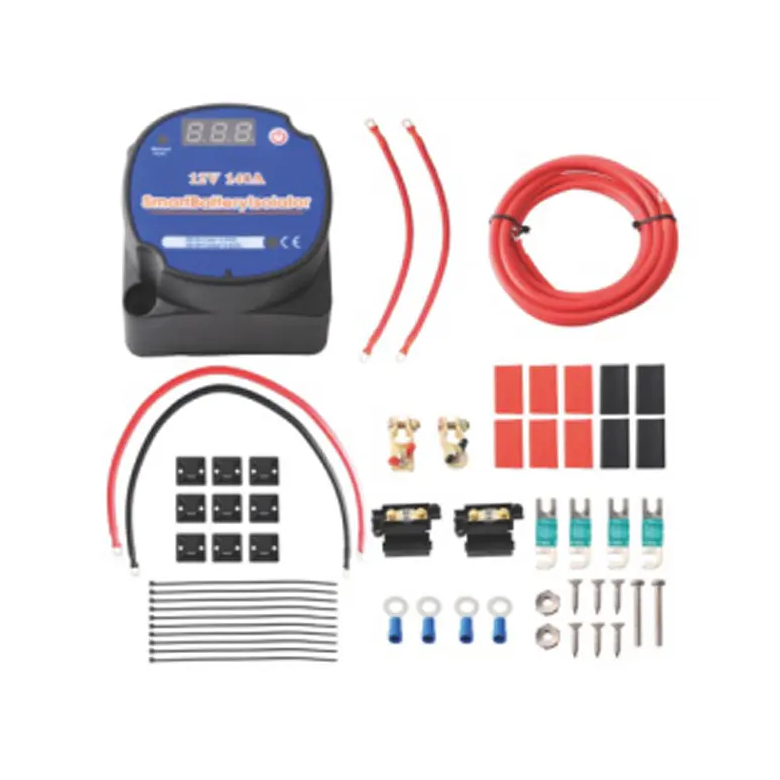
A marine dual battery isolator is one of those components that sits quietly inside the system but plays a steady role in how power is shared and protected. It connects and separates two batteries in a controlled way, helping the boat run more predictably in different conditions.
Most of the time, users never interact with it directly. It works in the background while the boat is operating.
What is a marine dual battery isolator in real use?
A marine dual battery isolator is a device that manages the relationship between two batteries on a boat. One battery is usually assigned to starting the engine. The other is used to support electrical equipment on board.
Instead of allowing both batteries to behave like a single shared power source, the isolator controls when they connect and when they stay separate.
In simple terms, it:
- allows both batteries to charge when the engine is running
- separates batteries when the engine is off
- prevents unwanted power transfer between them
- helps keep starting power reserved
This separation sounds simple, but it changes how stable the whole electrical system feels during real operation.
Why do boats rely on two batteries instead of one?
On the water, electrical demand does not stop when the engine stops. Lights, navigation systems, communication tools, and pumps may still need power even when the boat is idle.
If everything runs on a single battery, that battery has to handle both engine starting and all other equipment. Over time, this creates imbalance.
A two-battery setup divides responsibilities:
- one battery focuses on ignition
- one battery supports onboard systems
This structure makes the system more flexible, but it also creates a new challenge. Without control, both batteries can still drain unevenly or interfere with each other. That is where isolation becomes important.
How does a marine dual battery isolator actually operate?
The working idea is based on changes in electrical activity inside the boat.
When the engine is running, the charging system begins to produce power. The isolator detects this condition and connects both batteries to the charging source.
When the engine stops, the charging activity drops. At that point, the isolator separates the batteries so they no longer share power flow.
A simplified sequence looks like this:
- Engine starts and charging begins
- Electrical system becomes active
- Both batteries are connected for charging
- Engine stops and charging level drops
- Batteries are separated automatically
- Auxiliary battery continues supplying onboard loads
There is no need for manual switching. The system reacts on its own based on operating conditions.
What role does battery separation play in real boating conditions?
On a boat, conditions can change quickly. Sometimes the engine runs for a while, then stops for fishing, anchoring, or resting. During those idle periods, electrical equipment may still be in use.
Without separation, those devices may slowly draw power from both batteries. That includes the starting battery, which is supposed to stay ready for ignition.
Separation helps create a clear boundary:
- starting battery stays reserved
- auxiliary battery handles daily usage
- energy flow becomes more predictable
This kind of structure reduces uncertainty when restarting the engine after a long pause.
How does it help protect the starting battery?
The starting battery has one main job: powering the engine ignition. If it becomes too weak, the boat may not start, even if other systems are still working.
This is one of the main concerns in marine electrical systems.
A dual battery isolator reduces this risk by preventing unnecessary discharge.
When the engine is off:
- onboard equipment uses the auxiliary battery
- the starting battery is disconnected from load
- accidental drain is reduced
This does not make the battery immune to wear, but it helps avoid sudden drops in available power.
Why is power management so important at sea?
Unlike land-based environments, boats operate in conditions where external support is limited. If electrical power becomes unstable, there is no easy backup solution nearby.
At the same time, modern boats often rely on multiple systems running together:
- navigation displays during travel
- lighting for visibility and safety
- pumps for water management
- communication devices for contact
These systems may run for long periods without engine support.
If all of them draw from a single battery source, the system becomes less predictable. A dual battery setup with isolation brings more structure into this energy flow.
How does automatic control change daily operation?
Manual systems require attention. Someone must decide when to connect or disconnect batteries. In real boating situations, this is not always practical.
Weather, movement, and multitasking can make manual control unreliable.
Automatic isolation removes that step.
The system adjusts itself based on conditions:
- connects batteries during charging periods
- separates them when the engine is off
- repeats this cycle automatically
This reduces the need for constant monitoring.
In everyday use, it means fewer decisions and more consistent behavior from the electrical system.
How does it affect battery lifespan over time?
Battery lifespan is influenced by how deeply it is discharged and how evenly it is used.
In a shared system without control, one battery may carry too much load while the other remains underused or unevenly charged.
A dual battery isolator helps balance this situation.
Over time, it may contribute to:
- less stress on the starting battery
- more even workload distribution
- fewer deep discharge events
- more stable charging cycles
The result is not instant, but gradual. The system becomes more balanced through repeated use.
What happens if a boat does not use battery isolation?
Without an isolator, both batteries may remain connected for long periods. This creates a shared power environment.
In practice, this can lead to:
- accessory equipment slowly draining the starting battery
- inconsistent charging between batteries
- reduced reliability after idle time
- unexpected power shortages when restarting
These issues often appear slowly, not immediately. That makes them harder to notice at first, but more noticeable over time.
How does it support onboard equipment usage?
Many boats are used for more than transportation. They often serve as platforms for extended activity on water.
This means electrical equipment may be used for long periods while the engine is off.
A dual battery isolator allows:
- auxiliary battery to handle onboard devices
- starting battery to remain protected
- longer usage time without affecting ignition readiness
- more stable energy separation between systems
This separation is especially useful during extended stops or slow operation periods.
How does system design influence performance?
Although the isolator is a single component, it depends heavily on how the overall electrical system is arranged.
Factors that influence performance include:
- quality of internal connections
- layout of battery placement
- stability under vibration and movement
- consistency of charging conditions
If the system is well arranged, the isolator can work smoothly. If the layout is unstable, even a good isolator may not perform at its full potential.
Why is reliability such a key concern in marine systems?
On land, a weak battery might still be manageable. On water, the situation is different. Once a boat is offshore, power stability becomes part of safety and operation.
A China Dual Battery Isolator supports reliability by:
- keeping starting power protected
- organizing energy flow between batteries
- reducing unexpected electrical loss
- improving system predictability
It does not increase power itself, but it helps manage what is already available in a more controlled way.
FAQs
1. What is a marine dual battery isolator used for?
It manages two batteries on a boat, separating engine starting power from auxiliary power while allowing controlled charging.
2. Why do boats need two batteries?
Because boats often run electrical equipment while the engine is off, two batteries help divide starting and accessory functions.
3. Does the isolator work automatically?
Yes. It switches between connecting and separating batteries based on engine and charging conditions.
4. What happens when the engine is off?
The batteries are separated, and onboard equipment usually runs from the auxiliary battery.
5. Can it help improve reliability on boats?
Yes. It helps keep the starting battery reserved, which improves the chance of successful engine startup.
6. Is it necessary for all boats?
It is more useful for boats with multiple electrical systems or longer periods of engine-off operation.
Related Products
Looking For Business Opportunity?
Request for a call today

No.128, Qianjin Road, Qianfeng Industrial Zone, Tangxia Town, Ruian, Zhejiang, China
-
-
Sophia Ye
-
Phone: +86-15305875100
-
WhatsApp: 15305875100
-
Email: [email protected]
-
- Mobile Terminal
Copyright 2024 Zhejiang Xiangrui Auto Electric Co., Ltd.

Relays And Modified Parts Factory
