

 English
 Español
Home / News / Industry News / What Are the Main Benefits of Using an Automatic Dual Battery Isolator
- Tel: +86-15305875100
- E-mail: [email protected]
- Please contact us if you have questions.
CONTACT US

Industry News
Jun 05,2026
What Are the Main Benefits of Using an Automatic Dual Battery Isolator
Vehicles today are no longer limited to basic transport functions. They often carry multiple electrical systems at the same time. Some are related to driving. Others support comfort, work tools, or communication equipment. As electrical demand increases, managing power becomes a more important part of system design.
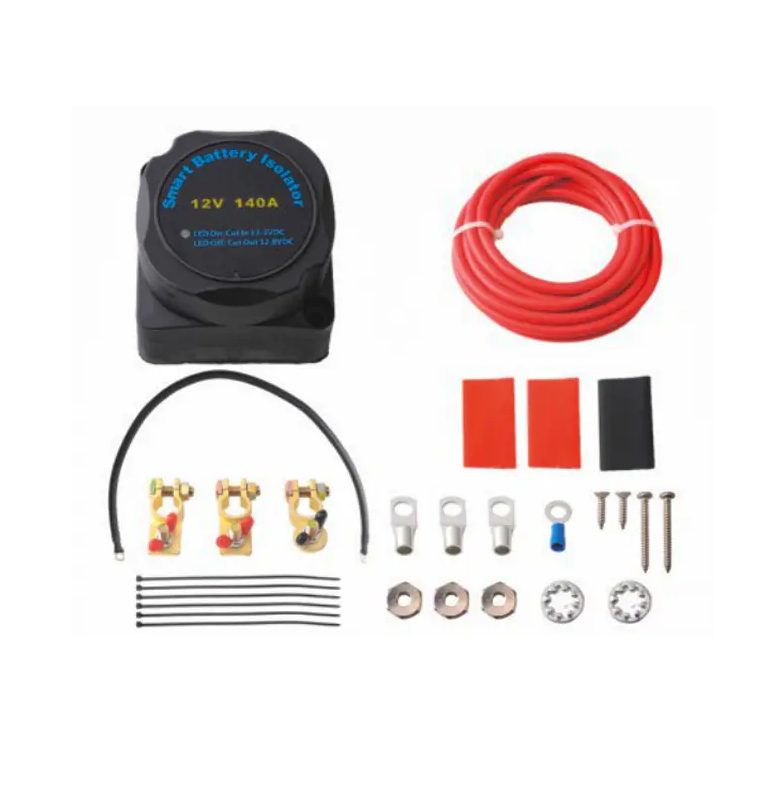
In many setups, a single battery is not enough to handle everything. A second battery is added to share the load. Once two batteries exist in the same system, their interaction needs to be controlled. That is where an automatic dual battery isolator comes in.
It works quietly inside the system, deciding when batteries should work together and when they should stay separate.
What is an automatic dual battery isolator in real usage?
A dual battery isolator is a device that manages connection between two batteries in a vehicle. One battery is usually dedicated to starting the engine. The second battery is used for additional electrical equipment.
The isolator controls how these two batteries interact.
In simple terms, it:
- connects batteries when charging is available
- separates them when the engine is off
- prevents unwanted power transfer between them
This process happens automatically. The driver does not need to adjust anything during normal operation.
Instead of two batteries behaving like one shared system, they are organized into two functional roles.
Why do modern vehicles rely on two batteries instead of one?
As vehicles become more advanced, electrical demand continues to grow. Lighting systems, onboard devices, cooling units, and mobile equipment all require energy.
A single battery can struggle when both starting and accessory power are drawn from the same source.
Using two batteries helps divide responsibilities:
- one supports ignition
- one supports accessories and additional systems
This separation reduces pressure on a single power source and creates a more balanced system.
However, simply adding a second battery is not enough. Without control, both batteries may discharge unevenly. That is why an isolator becomes necessary.
How does an automatic dual battery isolator supplier operate step by step?
The working principle is based on electrical conditions inside the vehicle.
When the engine is running, the alternator produces charging power. The isolator detects this condition and allows both batteries to receive charge.
When the engine stops, the system changes behavior. It separates the batteries so they no longer share power flow.
A simplified process looks like this:
- Engine starts and system voltage rises
- Isolator recognizes charging condition
- Both batteries are connected for charging
- Engine stops and voltage drops
- Batteries are separated automatically
- Auxiliary battery continues powering equipment
This cycle repeats every time the vehicle is used.
The key idea is automatic control without manual switching.
How does it help protect the starting battery?
The starting battery is essential for vehicle operation. If it becomes weak or discharged, the vehicle may not start, even if other batteries are still charged.
One of the main benefits of a dual battery isolator is protecting this critical power source.
When the engine is off:
- accessories use the secondary battery
- the starting battery remains isolated
- deep discharge is avoided
This separation ensures that ignition power is always reserved.
In practical use, this reduces the chance of being unable to start the vehicle after long periods of inactivity or accessory use.
Why is power separation important in real driving conditions?
Vehicles are often used in different environments. Some are driven daily. Others remain parked for long periods while still powering equipment.
Without separation, all devices may draw from the same battery group. This can lead to uneven discharge.
Power separation helps organize energy use:
- starting system stays protected
- accessory systems operate independently
- charging is shared only when appropriate
This structure creates more predictable behavior in different situations.
It is especially useful in vehicles that run additional equipment while parked.
How does automatic operation change user experience?
Manual systems require attention. Someone must decide when to connect or disconnect batteries. This is not always practical, especially in work or travel environments.
Automatic systems remove this responsibility.
The isolator responds to system conditions without user input. It adjusts itself based on whether the engine is running or stopped.
This brings several practical improvements:
- less need for monitoring
- fewer human errors in switching
- smoother transition between driving and parked states
- more consistent power behavior
In daily use, this makes the system easier to manage.
How does it support battery lifespan over time?
Battery lifespan depends heavily on usage patterns. Deep discharge and uneven charging are two common factors that reduce battery life.
A dual battery isolator helps reduce these risks by controlling how energy is distributed.
Over time, this can lead to:
- reduced stress on the starting battery
- more balanced usage between both batteries
- fewer extreme discharge cycles
- improved long-term stability
Instead of one battery carrying all electrical demand, the load is shared in a controlled way.
This does not stop natural wear, but it helps reduce unnecessary strain.
What happens when there is no isolation system?
If you don't install a dual battery isolator, the two batteries will stay linked nonstop, leading to unregulated power transfer between them.
You'll likely run into these common issues:
- Onboard accessories drawing power from the starting battery
- Imbalanced charging while the engine is running
- Dropped performance after the vehicle sits idle for a long time
- Sudden power failure at crucial moments
These troubles rarely show up right away; they tend to worsen gradually. Once you notice them, they will disrupt daily use and compromise the whole system's dependability.
How does it support extended use of vehicles?
Many vehicles stay stationary with the engine off for hours, yet their electrical devices keep running. This is typical for camper setups, outdoor work gear and mobile service units.
Proper power management is critical for such scenarios. The dual battery isolator delivers the following benefits:
- Lets you run auxiliary devices without draining the starting battery
- Reserves the main battery solely for engine ignition
- Regulates power transfer between the two battery sets
- Extends how long electrical equipment can run with the engine off
All these make long-duration off-engine operation feasible and steady.
How does system design influence performance?
A battery isolator is just a component of the vehicle's full electrical system. Its real-world performance relies heavily on how well it is fitted into the overall vehicle circuit.
Multiple details can change its working state:
- Firmness of all electrical connections
- Installation position in the circuit layout
- Stable response during continuous operation
- Matching degree with the battery configuration
A well-planned electrical setup lets the isolator run reliably in all kinds of conditions. By contrast, poor integration will cause instability, even if the isolator itself is in perfect working order.
Why is automation becoming more common in vehicle power systems?
Today's vehicle electrical systems are built to cut down manual operation and maintain steady performance.
Vehicles work under constantly changing conditions, and drivers cannot keep adjusting electrical settings while driving or working. Automation fixes this pain point effectively.
Automatic dual battery isolators bring key advantages:
- Real-time adjustment according to the system's working state
- No more manual switching operations
- More balanced power distribution
- Easier and more practical use in actual working scenarios
This also fits the mainstream trend of simplifying vehicle system operation.
How does it affect overall system reliability?
A vehicle's overall reliability depends not just on mechanical parts, but also heavily on stable electrical performance.
The dual battery isolator keeps the vehicle's power supply well organized, which greatly boosts system reliability. It guarantees:
- The starting battery always has enough power to fire up the engine
- Auxiliary electrical systems never interfere with ignition
- Power flow stays fully regulated at all times
- Consistent and predictable system performance over long-term use
This layout keeps the entire electrical system running smoothly, even under heavy load.
FAQs
1. What does an automatic dual battery isolator do?
It manages two batteries in a vehicle by controlling when they connect and separate based on engine and charging conditions.
2. Why do vehicles use two batteries?
Two batteries allow separation between starting power and accessory power, improving stability and reducing strain on a single battery.
3. Does it work automatically?
Yes. It responds to system conditions such as engine running or stopping without manual control.
4. Can it improve battery lifespan?
It can help by reducing deep discharge and balancing usage between batteries, which supports longer service life.
5. What problems can it prevent?
It helps prevent starting battery drain caused by accessories and reduces uneven power distribution between batteries.
6. Where is it commonly used?
It is used in vehicles with additional electrical equipment or extended power needs, such as work or travel setups.
Related Products
Looking For Business Opportunity?
Request for a call today

No.128, Qianjin Road, Qianfeng Industrial Zone, Tangxia Town, Ruian, Zhejiang, China
-
-
Sophia Ye
-
Phone: +86-15305875100
-
WhatsApp: 15305875100
-
Email: [email protected]
-
- Mobile Terminal
Copyright 2024 Zhejiang Xiangrui Auto Electric Co., Ltd.

Relays And Modified Parts Factory
