- Tel: +86-15305875100
- E-mail: [email protected]
- Please contact us if you have questions.
CONTACT US


 English
 Español

Industry News
May 29,2026
How Do Glare Searchlight Perform in Outdoor Environments
Outdoor lighting is never a fixed situation. One moment the area feels clear, the next moment dust, humidity, or distance changes how everything looks. In these shifting conditions, Glare Searchlight are often used as a practical way to restore visibility across large spaces.
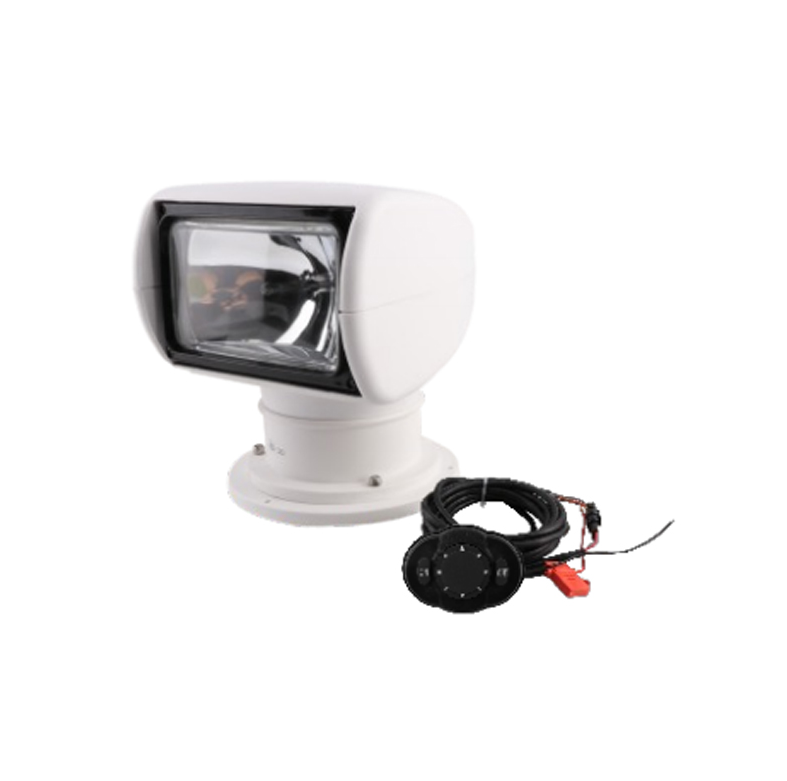
They are not designed to light everything evenly. Instead, they project a strong directional beam that helps define space, movement, and distance when natural light disappears.
Understanding their performance outdoors is less about specifications and more about how they behave in real surroundings.
Why are glare searchlights commonly used outdoors?
Outdoor environments tend to be wide, open, and uneven in lighting needs. Unlike indoor areas, there are no walls to reflect light or contain brightness. Everything depends on how far and how clearly light can travel.
That is where searchlights become useful. They create a visible path of illumination that helps people orient themselves in large or dark spaces.
In practice, they are often seen in places where visibility changes quickly or where coverage needs to stretch across distance:
- Large open work areas
- Outdoor monitoring points
- Temporary nighttime operations
- Coastal or remote locations
- Security-related outdoor zones
The key point is not just brightness, but reach and direction.
How does open space affect light behavior?
In open outdoor spaces, light behaves differently than in enclosed environments. There are no surfaces to bounce off nearby, so the beam travels forward more freely.
This creates a sense of depth. Objects in the distance may not appear fully detailed, but their shape becomes easier to recognize compared to having no light at all.
At the same time, open air introduces variables. Even when the weather feels calm, small particles like dust or moisture can subtly change how the beam looks to the eye.
The light itself does not weaken in structure, but perception changes depending on what is in the air.
What role does weather play in performance?
Weather is one of the most noticeable factors affecting outdoor lighting.
On a clear night, searchlights tend to show a defined and focused beam. The light travels cleanly, and objects at distance become easier to identify.
When humidity rises or light mist appears, the beam becomes more visible in the air. Instead of only lighting objects, it also reveals its own path. This can make the environment feel brighter, but sometimes slightly less sharp.
In light rain, the effect is similar. Water droplets scatter light in small ways, creating a softer visual field. Even so, the beam still provides usable guidance.
Wind does not directly change the light direction, but it can move particles in the air. This indirectly affects how stable the beam looks.
How do searchlights behave at different distances?
Distance is where searchlights show their most practical value.
At closer range, the beam appears tight and concentrated. Objects are clearly shaped, and contrast is strong. This helps when working within a defined area.
As distance increases, the beam naturally spreads. Instead of sharp detail, it becomes a broader field of visibility. This is where searchlights shift purpose—from detail lighting to spatial awareness.
Even when fine details are lost, the ability to detect movement or structure remains. That is often enough for outdoor coordination or monitoring tasks.
Do different terrains affect visibility?
Outdoor terrain changes how light is perceived. The searchlight itself does not change, but surroundings influence what the eye sees.
In open flat areas, the beam travels cleanly and feels more direct. There are fewer interruptions, so visibility feels more stable.
In uneven or mixed environments, light interacts with surfaces differently. Some areas reflect more light, while others absorb it, creating contrast within the same space.
Wet ground, for example, can reflect brightness and make the area feel more illuminated than it actually is. Dry or rough surfaces tend to absorb light, reducing reflected brightness.
These variations are normal in outdoor use and are part of real-world performance.
How do searchlights perform in low-visibility conditions?
Low-visibility conditions are where searchlights are most often tested in real life.
In fog, dust, or haze, light does not travel in a straight visual line from the human perspective. Instead, it interacts with particles in the air.
This creates two effects at the same time:
- The beam becomes more visible in the air
- The clarity of distant objects may reduce
So while the light feels stronger visually, detailed visibility may not increase at the same rate.
Even so, the searchlight still provides directional guidance, which is often the most important factor in such environments.
What about large-area outdoor coverage?
Large spaces do not require every corner to be equally bright. What matters more is orientation and structure.
Glare searchlights are often used to create reference points across wide zones. Instead of filling the entire area, they help define direction, boundaries, or focal points.
This makes it easier for people to understand layout and movement, especially when natural lighting is absent.
In large environments, the beam often serves as a visual anchor rather than full illumination.
How does installation style influence real use?
Searchlights can be installed in permanent fixed mounts or more flexible setups, based on where and how they're going to be used.
Fixed mounting delivers steady lighting coverage for areas that need constant illumination. Once set in place, the light stays stable and reliable long‑term.
Flexible installation lets users move the light around as needs change. This works well for shifting work zones or places that only need temporary lighting.
The way you install the searchlight doesn't alter its basic light output, but it directly impacts how practical it is in different real‑life situations.
How do environmental reflections change perception?
Outdoor areas have all kinds of surfaces that either bounce light or soak it up. These surfaces change how bright the light looks, not how bright the searchlight actually is.
Metal frames, water, and smooth polished surfaces reflect light strongly, making an area seem brighter than it really is.
By contrast, natural ground like dirt, grass and rough ground absorbs most light. Less light bounces back, so the space feels dimmer visually.
That's why the same searchlight can feel totally different just by moving it to a new location.
What role does maintenance play in outdoor performance?
Outdoor equipment has to stand up to dust, dampness and changing temperatures day in and day out. Over time, these factors build up on surfaces and wear down mechanical parts.
Searchlights don't need complicated maintenance work—just simple regular checks and cleaning.
Typical upkeep steps include:
- Wiping outer casings to clear built‑up dust
- Checking mounting brackets to make sure they stay tight after long‑term use
- Keeping lenses and light‑emitting areas free of blockages
- Securing wiring connections and protective housings
These easy routine tasks keep the searchlight working steadily over time.
Why real environments matter more than controlled tests?
Outdoor equipment has to stand up to dust, dampness and changing temperatures day in and day out. Over time, these factors build up on surfaces and wear down mechanical parts.
Searchlights don't need complicated maintenance work—just simple regular checks and cleaning.
Typical upkeep steps include:
- Wiping outer casings to clear built‑up dust
- Checking mounting brackets to make sure they stay tight after long‑term use
- Keeping lenses and light‑emitting areas free of blockages
- Securing wiring connections and protective housings
These easy routine tasks keep the searchlight working steadily over time.
What makes them practical in everyday outdoor use?
In practical terms, users do not evaluate searchlights by technical description. They evaluate them by whether the light helps them see what they need to see, when they need to see it.
Glare searchlights are useful because they stay reliable in changing conditions. They provide direction, structure, and visibility without requiring perfect surroundings.
Their performance in outdoor environments is shaped by interaction with air, distance, weather, and terrain. Instead of resisting these factors, they function within them.
Related Products
Looking For Business Opportunity?
Request for a call today

No.128, Qianjin Road, Qianfeng Industrial Zone, Tangxia Town, Ruian, Zhejiang, China
-
-
Sophia Ye
-
Phone: +86-15305875100
-
WhatsApp: 15305875100
-
Email: [email protected]
-
- Mobile Terminal
Copyright 2024 Zhejiang Xiangrui Auto Electric Co., Ltd.

Relays And Modified Parts Factory
