- Tel: +86-15305875100
- E-mail: [email protected]
- Please contact us if you have questions.
CONTACT US


 English
 Español

Industry News
Apr 17,2026
What Are the Common Applications of Switch Panel
Switch panels are often overlooked in daily life, yet they play a quiet role in how spaces function. They sit on walls, embedded in machines, or integrated into control systems. A simple touch can change lighting, activate equipment, or manage an entire room environment.
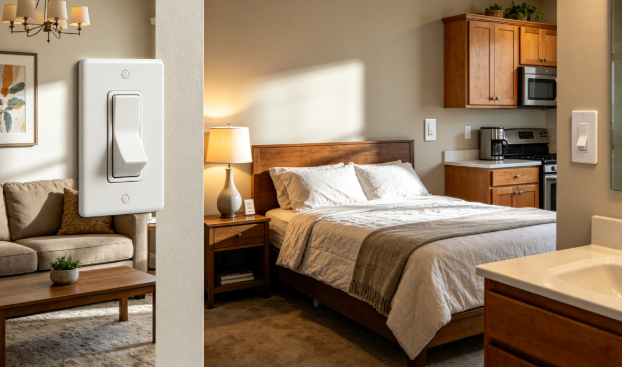
Their use is not limited to one setting. Over time, panels have become part of many environments, from homes to industrial spaces. The idea behind them is simple: provide a central point for control.
Where are switch panels used in residential spaces?
Homes are one of the most familiar environments for panels. They are commonly installed in bedrooms, kitchens, living rooms, and hallways.
In these spaces, panels are mainly used to control lighting. A single panel may manage one light or several zones in a room. Some setups also include control for fans or small home systems.
The design of residential panels often focuses on ease of use. Clear layout and simple operation matter more than complexity. People expect quick response and intuitive control.
In modern homes, panels are also becoming part of broader living systems. Lighting, curtains, and temperature adjustments may be linked through a single interface.
How are switch panels used in office environments?
Offices rely on structured control systems. Lighting, meeting rooms, and shared spaces often require coordinated operation.
Panels help manage these needs. In meeting rooms, a panel may control lighting levels or switch between different room settings. In open office areas, they help divide lighting zones for efficiency.
There is also a focus on consistency. When multiple rooms follow similar control layouts, users can move between spaces without confusion.
Some office designs place panels near entrances or shared walls. This makes access simple and reduces unnecessary movement.
What role do switch panels play in hotels?
Hotels use panels in almost every guest room. They are part of the guest experience, even if they are not the main focus.
In a typical room, panels may control lighting, bedside lamps, curtains, and sometimes temperature settings. The goal is to give guests easy control without complicated steps.
Design plays a role here as well. Hotel panels often follow a consistent style across all rooms. This creates a unified experience.
Some panels include indicator lights or labeled zones. These small details help guests understand the system quickly, even in unfamiliar surroundings.
Where Are Switch Panels Used Across Different Environments?
Panels appear in many places, but their role changes depending on the environment. The table below gives a clear overview of how they are commonly applied.
| Environment Type | Main Applications | Key Focus Area | Typical Usage Style |
|---|---|---|---|
| Residential Spaces | Lighting control, room settings | Comfort and simplicity | Easy, intuitive operation |
| Office Buildings | Meeting rooms, lighting zones | Efficiency and structure | Coordinated control layout |
| Hotels | Room lighting, curtains, ambiance control | User experience | Simple guest-friendly use |
| Industrial Facilities | Machinery control, safety systems | Reliability and durability | Functional operation focus |
| Commercial Spaces | Display lighting, environment adjustment | Visual presentation | Flexible zone control |
Where are switch panels used in commercial buildings?
Commercial buildings include shopping centers, restaurants, and public venues. Each of these spaces uses panels in different ways.
In retail environments, panels help manage lighting across display areas. Adjusting brightness can change how products are presented.
Restaurants may use panels to control dining area lighting and background settings. Different times of day often require different atmospheres.
Public buildings such as libraries or community spaces use panels to manage shared lighting systems. The goal is often efficiency and accessibility.
These environments often require a balance between user control and centralized management.
How do switch panels support smart system integration?
Modern buildings are increasingly connected. Panels are now part of broader control systems rather than standalone tools.
In smart environments, a single panel may interact with multiple systems. Lighting, ventilation, and other functions can be linked together.
This allows users to adjust multiple settings at once. Instead of controlling each element separately, a single action can trigger a set of changes.
The layout of these panels often reflects this shift. Interfaces are designed to be simple, even when the system behind them is complex.
What makes switch panels suitable for multi-environment use?
One reason panels are widely used is their adaptability. The same basic idea works in very different settings.
In homes, they focus on comfort and simplicity. In offices, they support structure and efficiency. In industrial areas, they prioritize reliability. In hotels, they support user experience.
This flexibility comes from their modular nature. The internal function may change, but the external purpose remains similar: control at a fixed point.
Design adjustments allow them to fit into different environments without changing their core role.
How does design influence switch panel applications?
Design is not only about appearance. It also affects how users interact with the panel.
In residential and hotel spaces, panels often blend into the wall. Neutral colors and smooth surfaces help them fit into interior design.
In commercial and industrial settings, visibility may matter more. Clear labels and structured layouts help reduce confusion.
Touch-based and button-based designs may both appear depending on the environment. Each approach supports different usage habits.
Even small design choices, such as spacing or layout, can influence how easily a panel is used in daily operations.
Why are switch panels still widely used today?
Even with growing digital control systems, panels remain common. Their simplicity is part of their strength.
They offer direct control without unnecessary steps. In many environments, this reliability is still preferred.
They also integrate well with newer systems. Rather than being replaced, they are often adapted.
Across homes, offices, hotels, and industrial spaces, panels continue to serve as a practical control point. Their role changes depending on the environment, but the function remains steady: making control accessible and organized.
Related Products
Looking For Business Opportunity?
Request for a call today

No.128, Qianjin Road, Qianfeng Industrial Zone, Tangxia Town, Ruian, Zhejiang, China
-
-
Sophia Ye
-
Phone: +86-15305875100
-
WhatsApp: 15305875100
-
Email: [email protected]
-
- Mobile Terminal
Copyright 2024 Zhejiang Xiangrui Auto Electric Co., Ltd.

Relays And Modified Parts Factory
