- Tel: +86-15305875100
- E-mail: [email protected]
- Please contact us if you have questions.
CONTACT US


 English
 Español

Industry News
Apr 24,2026
Where Is the Winch Relay Located in a Typical Setup
People tend to focus on the winch itself. It is visible, mechanical, and easy to understand. The relay, on the other hand, usually sits out of sight. Yet it plays a quiet role that shapes how the whole system behaves.
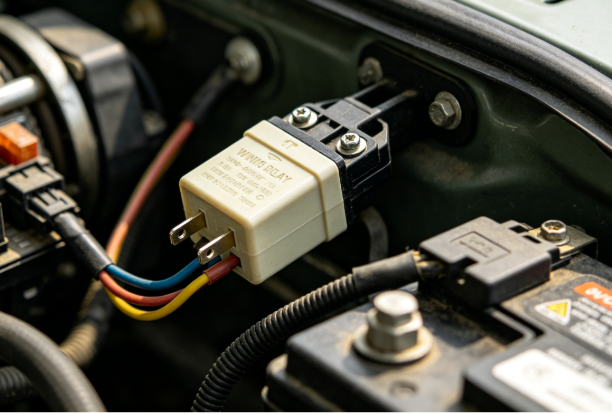
So the question comes up often: where is the winch relay actually located?
There is no single fixed answer. The position changes depending on how the system is built, how the space is used, and how much protection the installer wants. Still, some patterns appear again and again. Once you notice them, the layout starts to make sense.
What exactly does the relay do in everyday use?
A winch does not run directly from a switch. That would make control rough and unreliable. Instead, the relay acts as a middle point.
When you press the control, a small signal travels to the relay. The relay then allows a larger flow of power to reach the winch motor. It is a simple idea, but it keeps the system manageable.
Because of this role, the relay needs to sit somewhere that supports both control and power flow. It cannot be placed randomly. Its position affects how smoothly everything works.
Where do people usually install the relay?
If you look at different setups, you will notice that the relay often ends up in a few familiar areas. These are not strict rules, but they show what tends to work in practice.
- Close to the battery
- Inside the engine compartment
- Mounted together with the winch
- Housed inside a small control box
- Tucked behind the front structure of the vehicle
Each option reflects a different priority. Some focus on shorter wiring. Others aim for better protection. Some simply make use of available space.
In many cases, the relay is placed inside a sealed box. This keeps the wiring tidy and adds a layer of protection without making access too difficult.
Why does distance from the battery matter so much?
Electric systems behave better when the path between components is simple. When the relay sits near the battery, the connection feels more direct.
Shorter wiring often means fewer complications during installation. It also reduces the chances of something going wrong along the route.
That said, placing the relay too close without any cover is not always ideal. The area around the battery can be exposed to heat or movement. So the goal is not just proximity, but balance. Close enough to keep things efficient, but protected enough to avoid stress.
Does relay placement change how safe the system feels?
Yes, more than people expect.
Imagine needing to cut power quickly. If the relay is buried behind panels or placed in a hard-to-reach corner, that task becomes slower and more frustrating.
Now imagine the opposite. The relay is visible, easy to reach, and clearly mounted. Even if something goes wrong, it feels more manageable.
Safety is not only about preventing problems. It is also about how easy it is to respond when something unexpected happens. Placement plays a role in that.
Protection matters as well. Dust, water, and vibration are always present in real-world use. A poorly placed relay may still work at first, but over time small issues begin to appear.
Is the relay always attached to the winch itself?
Sometimes yes, sometimes no.
Some designs keep everything together. The relay sits on or near the winch, often inside a compact box. This approach keeps the system neat and easy to install.
Other setups separate the relay completely. It may be placed somewhere else on the vehicle, often in a more protected spot. This gives more flexibility, especially when space around the winch is limited.
Neither approach is automatically better. It depends on how the system is arranged and what the user values more: simplicity or flexibility.
What are the most common placement choices?
Looking across different builds, a few options appear again and again. Each comes with its own trade-offs.
| Location | Why It Is Chosen | What to Keep in Mind |
|---|---|---|
| Near the battery | Keeps wiring short | Needs shielding from surrounding conditions |
| Engine compartment | Easy to access during checks | Heat and movement can affect it |
| On the winch | Compact and direct layout | Less natural protection in some cases |
| Inside a control box | Cleaner and more protected setup | Requires space for mounting |
| Behind front panels | Makes use of hidden space | Must be sealed against debris |
This kind of comparison shows that placement is rarely about one perfect spot. It is more about choosing what works best in a given situation.
How much do environmental conditions influence the decision?
Quite a lot.
Winches are often used in places where conditions are far from gentle. Mud, moisture, dust, and constant vibration all become part of normal operation.
If the relay sits in an exposed position, it will face all of these elements directly. Over time, that exposure can affect how it responds. Small delays, inconsistent switching, or reduced reliability may begin to appear.
Because of this, many installations aim for some level of natural protection. Even a slight shift in position, such as moving the relay higher or placing it behind a barrier, can make a noticeable difference.
What do installers usually think about during setup?
There is no single checklist that fits every case, but a few practical thoughts tend to guide the process.
Accessibility matters. If the relay cannot be reached easily, maintenance becomes frustrating.
Protection is always part of the decision. Even a simple cover can extend the working life of the component.
Wiring needs to follow a clean path. Cables should not be forced into tight bends or routed through areas where they might rub or shift.
The relay also needs to stay firmly in place. Movement over time can loosen connections or create wear.
Heat is another quiet factor. Some areas naturally trap warmth, and placing the relay there may not be ideal in the long run.
These points are not complicated, but together they shape a more reliable setup.
Can the location actually influence how the winch feels to use?
In subtle ways, yes.
A well-placed relay helps the system respond in a steady and predictable manner. Control inputs feel consistent. Power delivery remains stable.
If the relay is placed in a less suitable spot, the changes may be small at first. But over time, they can affect how smooth the operation feels.
It is not always something users notice immediately. Instead, it shows up as small differences in reliability and ease of use.
How do different setups approach this in practice?
Different types of vehicles and equipment tend to handle relay placement in their own way.
Some prioritize quick access. Others focus more on protection. Some simply work within tight space limits and adapt as needed.
Despite these differences, the underlying idea remains the same. The relay should sit where it can control power effectively while staying protected enough to last.
Once you start looking at setups with this in mind, the choices feel less random. Each position reflects a balance between function, space, and real-world use.
Related Products
Looking For Business Opportunity?
Request for a call today

No.128, Qianjin Road, Qianfeng Industrial Zone, Tangxia Town, Ruian, Zhejiang, China
-
-
Sophia Ye
-
Phone: +86-15305875100
-
WhatsApp: 15305875100
-
Email: [email protected]
-
- Mobile Terminal
Copyright 2024 Zhejiang Xiangrui Auto Electric Co., Ltd.

Relays And Modified Parts Factory
