- Tel: +86-15305875100
- E-mail: [email protected]
- Please contact us if you have questions.
CONTACT US


 English
 Español

Industry News
Jul 03,2026
What Applications Drive Demand for Searchlight Manufacturer
Searchlights sit in a very specific corner of the lighting industry. They are not designed for general brightness. Their role is more focused. They extend visibility into distance, help control direction of attention, and support operations where normal lighting falls short.
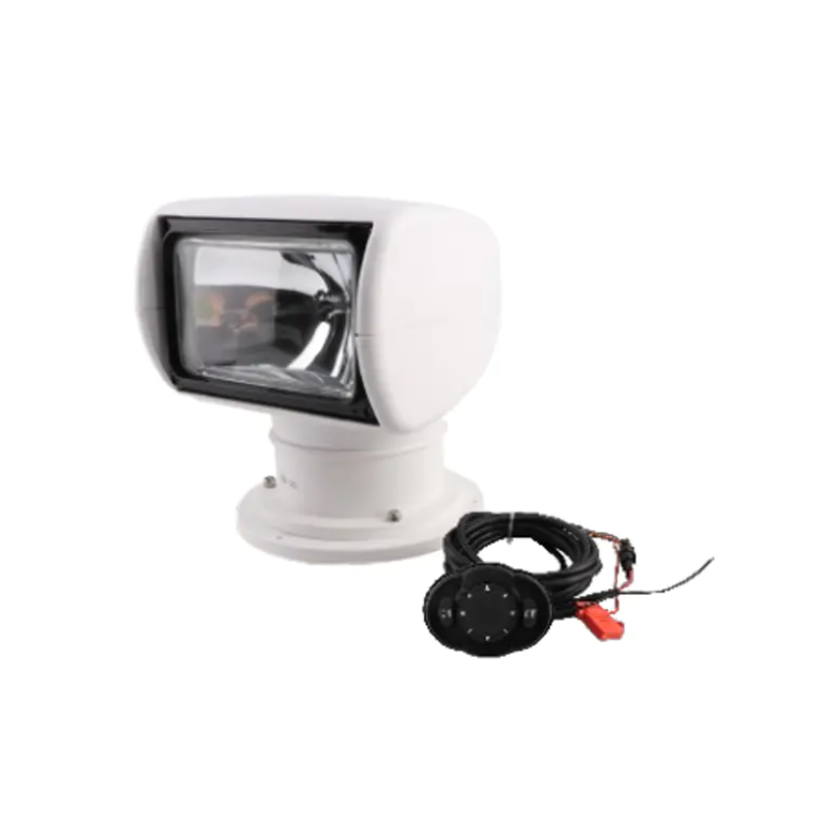
Demand for searchlight manufacturer is not driven by one single industry. It comes from many application areas that share a common requirement: the need to see clearly in wide, open, or unpredictable environments.
Over time, these application needs have changed how searchlight products are designed, selected, and used. The shift is gradual, but it is visible across multiple sectors.
Why do some environments still rely on searchlights instead of standard lighting?
General lighting systems are good at covering areas. They spread illumination across spaces. That works in controlled environments like indoor facilities or fixed outdoor installations.
Searchlights work differently. They concentrate light into a narrow direction and extend it over distance. This makes them suitable when visibility is not about coverage, but about reach.
There are several common conditions where searchlights remain useful:
- Large open spaces without fixed lighting points
- Situations requiring directional focus
- Environments with changing visibility conditions
- Tasks that depend on distance recognition
Instead of replacing standard lighting, searchlights fill a gap that general systems cannot cover well.
How does maritime use shape searchlight demand?
One of the most consistent application areas is maritime activity. Ships, ports, and offshore operations all depend on visibility that can extend across large water surfaces.
On water, lighting behaves differently. Reflection, movement, and distance make visual control more complex. Searchlights help provide a focused beam that can be adjusted quickly as conditions change.
In maritime environments, searchlights are commonly used for:
- Nighttime navigation support
- Dock approach and departure guidance
- Surface scanning in low visibility conditions
- Visual communication between vessels or shore points
What matters most here is stability under movement. Equipment must remain reliable even when the platform is not fixed. This requirement directly influences product design expectations.
Why is security work closely connected to searchlight systems?
Security applications rely heavily on visibility control. Large sites often cannot be fully covered by fixed lighting alone. There are always blind spots or areas that require attention at different times.
Searchlights provide flexibility in this environment. They allow operators to adjust focus quickly and respond to movement or unexpected activity.
Typical security-related usage includes:
- Perimeter monitoring of large facilities
- Temporary surveillance zones
- Night patrol support in outdoor areas
- Event security and crowd management spaces
The key requirement is responsiveness. Lighting must not only be strong, but also easy to redirect. This ability to shift focus without delay is a major reason searchlights remain part of security systems.
How do emergency situations influence searchlight demand?
Emergency environments are unpredictable. Lighting needs often appear suddenly and under difficult conditions. In these cases, speed of deployment becomes as important as performance.
Searchlights are used to create immediate visibility in areas where normal lighting is unavailable or insufficient.
Common emergency-related uses include:
- Search and rescue coordination
- Accident scene illumination
- Temporary outdoor command points
- Night operations in uncontrolled environments
These situations often require portable equipment. Devices must be moved, set up, and adjusted quickly. That practical requirement continues to influence demand patterns.
What role do construction and infrastructure projects play?
Construction sites are another major application area. Work often continues beyond daylight hours, especially in large-scale outdoor projects.
Searchlights help extend usable working time by illuminating wide areas where fixed lighting is not practical or cost-efficient.
They are commonly used in:
- Road construction zones
- Bridge and tunnel development areas
- Large open infrastructure projects
- Temporary work expansion sites
Unlike permanent lighting systems, these environments change frequently. Work zones move, equipment shifts, and layouts are adjusted. Lighting needs to follow these changes without slowing down operations.
Application comparison: how demand differs across industries
Different industries do not use searchlights in the same way. Their expectations vary depending on environment and workflow.
| Application Area | Main Purpose | Usage Pattern | Key Requirement |
|---|---|---|---|
| Maritime operations | Long-distance visibility | Continuous and adaptive use | Stability in open movement conditions |
| Security systems | Targeted observation | On-demand operation | Fast directional adjustment |
| Emergency response | Immediate illumination | Short-term intensive use | Rapid setup and mobility |
| Construction work | Area support lighting | Extended operation cycles | Adjustable coverage range |
| Logistics sites | Movement coordination | Repetitive night operations | Wide-area directional control |
This variation explains why searchlight manufacturers often work across multiple sectors rather than a single market.
How do logistics and industrial sites contribute to demand?
Industrial and logistics environments often operate around the clock. Even when production slows, movement of goods and equipment continues.
Searchlights help maintain visibility in large outdoor yards where fixed lighting cannot cover all areas effectively.
In these environments, they support:
- Nighttime loading and unloading operations
- Vehicle movement coordination
- Storage yard visibility
- Temporary expansion of working zones
A key factor here is operational continuity. Lighting must support workflow without interruption, especially during peak activity periods.
Why are outdoor events part of the demand structure?
Large outdoor events introduce temporary but intense lighting requirements. These environments change quickly and require flexible solutions.
Searchlights are often used to support visibility across wide open spaces where crowds gather and movement is continuous.
Typical applications include:
- Event perimeter visibility
- Stage area support lighting
- Temporary crowd direction zones
- Large public outdoor gatherings
Unlike permanent installations, these setups are short-term. That creates demand for systems that are easy to install, adjust, and remove.
How does mobility influence modern searchlight use?
Mobility has become an important factor across nearly all application areas.
Many environments no longer rely on fixed lighting systems alone. Instead, they use movable equipment that can be repositioned based on need.
Searchlights fit this pattern well because they can be:
- Relocated quickly
- Redirected during operation
- Used in different zones within the same site
- Adjusted without complex installation work
This flexibility is one reason they continue to appear in new application scenarios.
What challenges appear across different applications?
Although demand is strong, each application comes with different expectations. These differences create challenges for both users and manufacturers.
Some of the most common challenges include:
- Balancing portability with operational stability
- Adapting to different environmental conditions
- Managing varied usage intensity across industries
- Meeting both short-term and long-term operation needs
A product used in emergency response may need different design priorities than one used in logistics or maritime environments. These differences make standardization more complex.
How do application needs influence product development direction?
As applications expand, searchlight design is becoming more adaptable. Instead of focusing only on single-purpose systems, manufacturers increasingly consider multi-scenario use.
This shift is shaped by real operational feedback from different industries. Equipment is expected to work in more than one environment without losing stability.
As a result, development focus is gradually moving toward:
- Broader application compatibility
- Easier deployment across environments
- More flexible operational adjustment
- Improved response to changing conditions
This does not replace traditional design. It adds another layer of adaptability to meet evolving demand patterns.
FAQ
Why are searchlights still widely used in modern industries?
Because they provide long-distance directional visibility that general lighting cannot replace.
Which industries create the most demand for searchlight manufacturers?
Maritime, security, emergency response, construction, logistics, and event management sectors.
Are searchlights mainly used outdoors?
Most applications are outdoor, especially in open and wide-area environments.
What makes searchlights different from normal lighting systems?
They focus light into a specific direction rather than spreading it evenly across a space.
Why is demand for searchlight manufacturers stable?
Because many industries continue to require flexible, directional lighting in changing environments.
Related Products
Looking For Business Opportunity?
Request for a call today

No.128, Qianjin Road, Qianfeng Industrial Zone, Tangxia Town, Ruian, Zhejiang, China
-
-
Sophia Ye
-
Phone: +86-15305875100
-
WhatsApp: 15305875100
-
Email: [email protected]
-
- Mobile Terminal
Copyright 2024 Zhejiang Xiangrui Auto Electric Co., Ltd.

Relays And Modified Parts Factory
