

 English
 Español
Home / News / Industry News / LED Searchlight Manufacturer for Marine, Construction, and Emergency Lighting Needs
- Tel: +86-15305875100
- E-mail: [email protected]
- Please contact us if you have questions.
CONTACT US

Industry News
Jul 10,2026
LED Searchlight Manufacturer for Marine, Construction, and Emergency Lighting Needs
Lighting in demanding environments is rarely simple. It is tied to movement, safety, and timing. When visibility drops, work slows down or becomes risky. This is why LED searchlight manufacturer continue to gain attention across marine, construction, and emergency fields. Their role is not only about producing lighting equipment. It is about supporting real working conditions where clarity can change moment by moment.
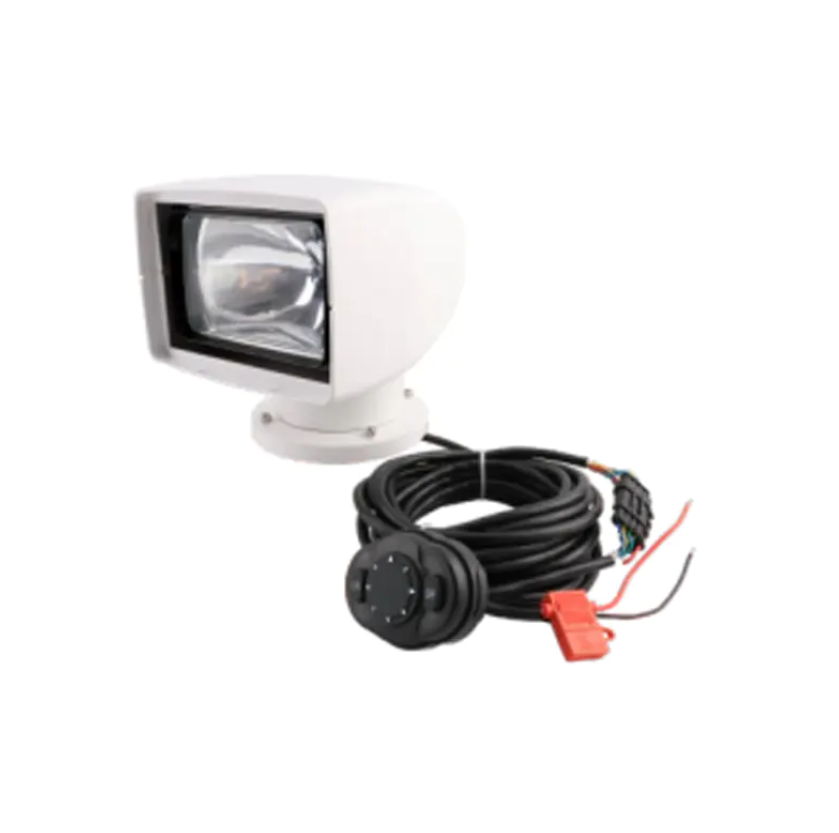
Across these sectors, expectations are shifting. Users are no longer focused on a single lighting function. They want lighting that can adjust to different environments, different distances, and different levels of urgency.
Why do marine, construction, and emergency fields rely on searchlights?
Each of these environments shares one common condition: uncertainty in visibility.
At sea, light can disappear quickly with weather changes or distance. On construction sites, structures block sightlines and create uneven shadows. In emergency situations, lighting is often needed in unfamiliar or unstable surroundings.
LED searchlights help reduce this uncertainty. They provide directed illumination instead of scattered light. This helps workers focus on specific areas rather than guessing in low visibility conditions.
There is also a practical reason. These environments often require fast decisions. Clear lighting supports faster understanding of surroundings.
How do marine conditions influence searchlight design?
The sea brings harsh, ever-changing working conditions. Constant damp, strong winds and airborne salt all wear down equipment, and these elements directly decide how marine searchlights are built and configured.
Manufacturers prioritize sealing and structural stability first. Lights mounted on boats or offshore facilities have to keep running reliably through rough seas, rocking waves and sudden shifts in weather.
Light projection range is another key consideration. There are no landmarks out on open water, so the beam has to travel far and stay tightly focused to support safe navigation and emergency work.
Operability is also factored into every design. Crews often operate the lights in wet, uncomfortable weather. All controls are kept straightforward and easy to reach, with no complicated steps required to adjust brightness or angle.
What role do LED searchlights play on construction sites?
Construction sites change constantly. Materials move, structures grow, and work zones shift during different phases of a project. Lighting must follow these changes.
LED searchlights are often used to highlight specific work areas. Instead of lighting an entire site evenly, they focus on zones where attention is needed.
Flexibility becomes important here. Equipment may need to be repositioned several times during a single project. A lighting system that can be adjusted quickly helps maintain workflow.
There is also the issue of mixed depth. Some areas are open, while others are partially enclosed. Lighting must adapt without creating harsh contrast or unclear shadows.
How are emergency situations different in lighting requirements?
Emergency lighting is driven by urgency. Conditions are often unpredictable. Power sources may be limited or unstable. Decisions must be made quickly.
LED searchlights are used to restore visibility in these moments. They help guide movement, locate areas of interest, and support coordination between teams.
Portability plays a strong role. Equipment may need to be carried into different locations without delay. Lightweight and easy-to-handle designs are often preferred.
Simplicity is equally important. In stressful situations, complicated controls slow down response. Clear operation helps reduce confusion and supports faster action.
What design priorities do manufacturers focus on?
LED searchlight manufacturers tend to work around practical needs rather than decorative design. Several common priorities appear across different products.
These include:
- Direction control for focused lighting
- Structural protection for outdoor environments
- Stable operation during movement or vibration
- Simple handling for fast deployment
- Adaptability across different working scenes
These features are often combined rather than used separately. The goal is to support real usage rather than isolated performance.
How do manufacturers respond to different industry needs?
Different lines of work have their own lighting requirements, even when they use the same style of light. Manufacturers tweak the structure and handling features instead of redesigning the whole product.
Marine customers want far-reaching focused beams and strong protection against tough ocean environments. Construction crews need lights that can be shifted and set up anywhere quickly. Emergency teams value fast startup and bright, clear light output.
Instead of creating entirely new products for every industry, manufacturers build flexible light units. Simple changes to the housing or mounting brackets let a single light work for many different jobs.
Common lighting needs across industries
| Environment | Lighting Focus | Usage Situation |
|---|---|---|
| Marine | Long-distance direction | Navigation and open water work |
| Construction | Area-focused illumination | Task-based work zones |
| Emergency response | Rapid visibility recovery | Time-sensitive operations |
Why is adaptability becoming more important?
Work environments are no longer fixed. A single project may involve changing conditions from start to finish. Lighting must adjust without creating delays.
Adaptability also reduces the need for multiple lighting systems. One adjustable searchlight can be used in different situations with small changes in setup.
This flexibility helps reduce complexity in planning. Instead of managing several types of equipment, users can rely on fewer but more versatile tools.
How does portability affect real use?
Portability is becoming a practical requirement rather than an optional feature. In many cases, lighting needs to move with the work.
On construction sites, equipment may shift between zones. In emergency response, time pressure makes fast relocation important. On marine platforms, space can be limited, so compact handling matters.
Portable design does not only mean lighter weight. It also includes ease of setup and repositioning. A system that can be moved quickly supports smoother operation.
What challenges exist in manufacturing LED searchlights?
Even with steady demand, several challenges remain.
One challenge is balancing focused light with wide usability. A beam that is too narrow may limit flexibility. A beam that is too wide may reduce clarity.
Another challenge is environmental exposure. Equipment must handle dust, moisture, and movement without frequent maintenance.
There is also variation in user expectations. Different industries interpret "good lighting" in different ways. Manufacturers must find a middle path that works across these conditions.
How are searchlights used differently across environments?
Although the product type is similar, usage patterns vary widely.
In marine environments, searchlights often guide direction and support long-range visibility. On construction sites, they are used to highlight specific working zones. In emergency settings, they help restore visibility quickly in unstable conditions.
This shows that lighting is not defined only by its design, but also by how it is applied in practice.
Functional focus by application
| Application | Main Function | Operational Need |
|---|---|---|
| Marine use | Directional visibility | Navigation support |
| Construction use | Targeted lighting zones | Work precision |
| Emergency use | Rapid illumination | Safety and coordination |
How is user experience influencing design direction?
User experience is becoming part of lighting design thinking. It is not only about output strength. It is also about how easy the system is to understand and use.
Simple control structures are preferred. Clear adjustment options help reduce setup time. This is especially important in environments where conditions change quickly.
Physical handling also matters. If equipment is difficult to position or adjust, it slows down work. Manufacturers are paying more attention to how products feel during real operation.
What trends are shaping LED searchlight manufacturing?
Several patterns are becoming more visible.
One trend is simplification. Systems are being designed with fewer unnecessary steps. Another is multi-environment use, where one product can serve different industries.
Durability remains important. Equipment is expected to perform under repeated use without frequent intervention.
There is also a shift toward practical design thinking. Instead of focusing on complexity, manufacturers are refining how existing structures perform in real conditions.
How do manufacturers balance function and simplicity?
Strong lighting performance alone is not enough. If a system is difficult to use, it loses effectiveness in real situations.
Manufacturers often refine structure rather than add features. Small design adjustments can improve usability without increasing complexity.
Simplicity does not reduce capability. In many cases, it supports more reliable operation because users can understand and control the system more easily.
What direction is the industry moving toward?
The industry is gradually moving toward adaptable and practical lighting systems. Marine, construction, and emergency sectors continue to influence design needs.
Future development is likely to focus on flexibility, ease of use, and stable performance under different conditions. Lighting systems are becoming less about fixed design and more about how well they fit into changing environments.
Related Products
Looking For Business Opportunity?
Request for a call today

No.128, Qianjin Road, Qianfeng Industrial Zone, Tangxia Town, Ruian, Zhejiang, China
-
-
Sophia Ye
-
Phone: +86-15305875100
-
WhatsApp: 15305875100
-
Email: [email protected]
-
- Mobile Terminal
Copyright 2024 Zhejiang Xiangrui Auto Electric Co., Ltd.

Relays And Modified Parts Factory
