- Tel: +86-15305875100
- E-mail: [email protected]
- Please contact us if you have questions.
CONTACT US


 English
 Español

Industry News
Jan 09,2026
Understanding the Role of Relays in Lawn Mower Circuits
Electrical Control in Lawn Mowers
Modern lawn mowers rely on relatively simple but carefully designed electrical systems to ensure reliable starting, safe operation, and controlled power distribution. At the heart of this system is a small but critical component often overlooked by users: the Lawn Mower Relay. This device acts as an intermediary between low-power control signals and higher-current electrical loads, allowing the mower to function efficiently without placing stress on switches or wiring.
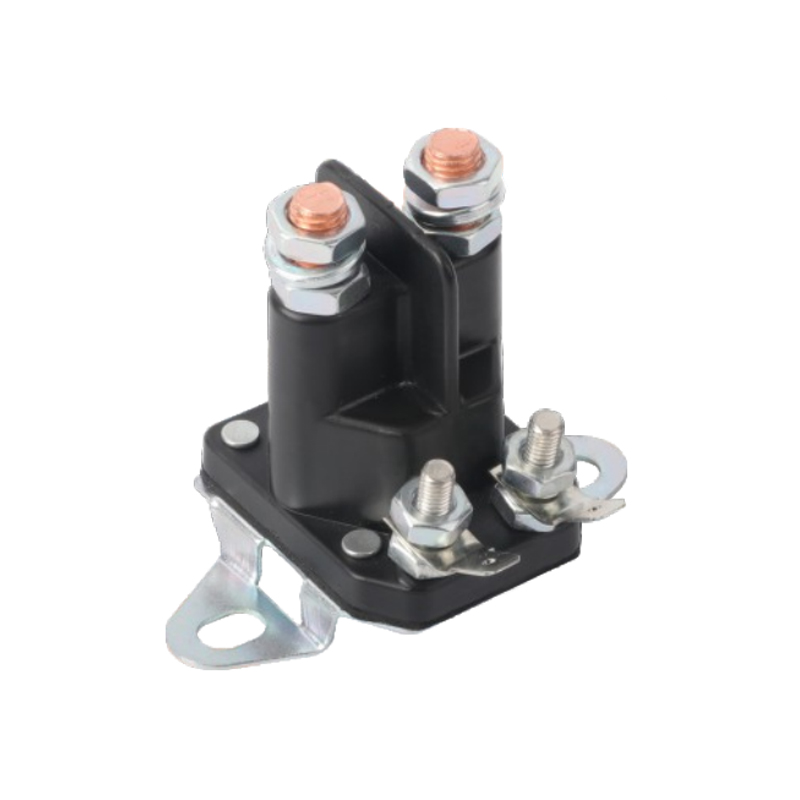
What a Relay Is and Why It Is Needed
A relay is an electrically operated switch that uses a small control current to open or close a circuit carrying a much larger current. In lawn mower applications, this principle is essential because many components such as starter motors or blade clutches, require more electrical power than a manual switch can safely handle.
- It separates low-current control circuits from high-current power circuits.
- It reduces wear on ignition switches and safety interlock switches.
- It allows compact and lightweight control components to manage powerful loads.
Without a relay, the electrical system would need heavier wiring and more robust switches, increasing cost and reducing reliability.
Role in the Starting Circuit
One of the important functions of the Lawn Mower Relay is in the engine starting process. When the operator turns the key or presses the start button, the relay responds instantly to route battery power to the starter motor.
- It receives a low-voltage signal from the ignition switch.
- It closes an internal contact that connects the battery directly to the starter.
- It opens again once the engine is running, preventing damage to the starter motor.
This controlled action ensures that high current flows only when necessary, protecting both electrical components and the battery.
Integration with Safety Interlock Systems
Safety is a major design priority in lawn mower electrical circuits, and relays play a vital role in enforcing safety conditions. Most mowers include seat switches, blade engagement switches, and brake or clutch sensors.
- The relay only activates if all safety conditions are met.
- It prevents the engine from starting if the operator is not properly seated.
- It helps shut down the engine or blade drive when unsafe conditions occur.
By working in conjunction with safety switches, the relay ensures compliance with safety standards while maintaining simple control logic.
Power Management for Accessories and Attachments
Beyond starting, relays are also used to manage electrical power for accessories such as electric blade clutches, headlights, or charging circuits. These components often require steady current and reliable switching.
- The relay isolates accessory loads from sensitive control wiring.
- It ensures stable voltage delivery to attachments under varying loads.
- It reduces electrical noise that could interfere with control signals.
This approach improves overall system durability, especially in outdoor environments exposed to vibration and moisture.
Protection of Electrical Components
Another critical role of relays is protecting expensive or hard-to-replace components. By acting as a controlled gate for current flow, the relay limits the risk of overheating or short circuits.
- It reduces arcing at control switches.
- It helps contain electrical faults to a single replaceable component.
- It simplifies troubleshooting by providing a clear switching point.
When a relay fails, replacement is usually inexpensive compared to the damage caused by uncontrolled current flow.
Contribution to Reliability and Maintenance
From a maintenance perspective, relays make lawn mower electrical systems easier to service. Technicians can test relay operation quickly, and standardized designs allow for straightforward replacement.
- Fault symptoms often point directly to relay issues, such as clicking without starting.
- Relays can be tested independently of motors or batteries.
- Modular design reduces downtime during repairs.
This reliability is especially important for commercial or frequent-use mowers.
A Small Component with a Major Role
Although physically small, the relay plays a central role in ensuring that lawn mower electrical systems operate safely, efficiently, and reliably. By controlling high-current circuits with low-power signals, it protects switches, supports safety features, and enables consistent performance across different operating conditions. Understanding how this component functions within the circuit not only helps users appreciate modern mower design but also makes troubleshooting and maintenance far more effective.
Related Products
Looking For Business Opportunity?
Request for a call today

No.128, Qianjin Road, Qianfeng Industrial Zone, Tangxia Town, Ruian, Zhejiang, China
-
-
Sophia Ye
-
Phone: +86-15305875100
-
WhatsApp: 15305875100
-
Email: [email protected]
-
- Mobile Terminal
Copyright 2024 Zhejiang Xiangrui Auto Electric Co., Ltd.

Relays And Modified Parts Factory
