- Tel: +86-15305875100
- E-mail: [email protected]
- Please contact us if you have questions.
CONTACT US


 English
 Español

Industry News
Jan 23,2026
Key Advantages of Using Multiple Switch Panels
Multi-Circuit Control Solutions
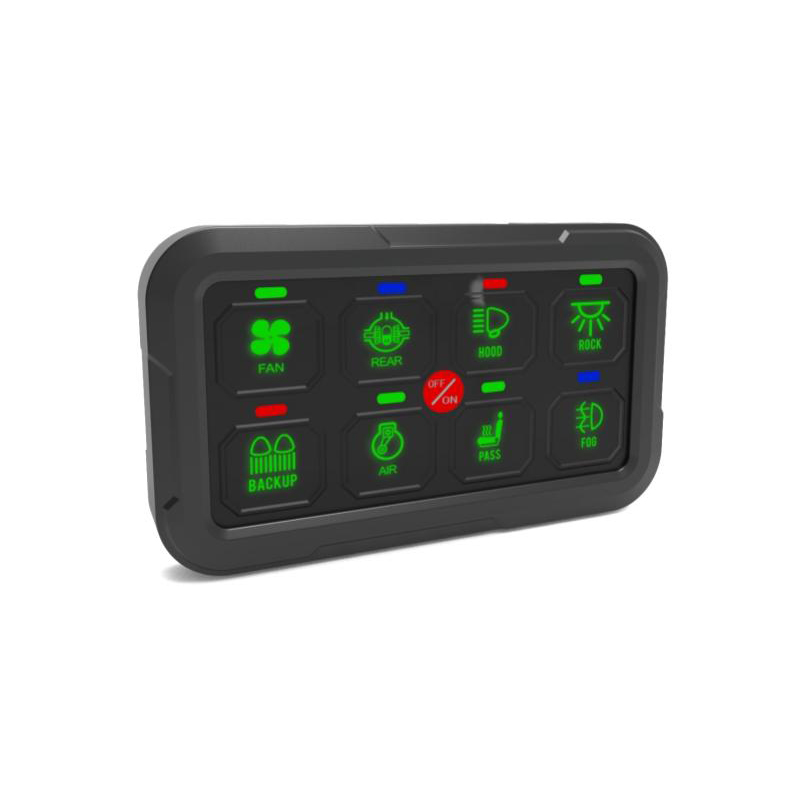
In modern electrical systems, controlling multiple circuits efficiently has become increasingly important. Whether in vehicles, marine applications, industrial equipment, or smart homes, users often need centralized and intuitive control over several electrical functions. Compared with traditional single switches, a Multiple Switch Panel offers a more integrated and scalable solution. Combining several switches into one unified interface improves usability, organization, and system reliability while reducing installation complexity.
Improved Space Efficiency and Layout
One of the obvious advantages of using a multi-switch design instead of individual switches is better use of available space.
- Multiple functions are consolidated into a single mounting area.
- Panel-based layouts reduce clutter on dashboards, walls, or control consoles.
- Compact designs allow easier integration into modern equipment with limited space.
This is especially valuable in vehicles or equipment where panel real estate is limited, and a clean layout is essential.
Centralized and Intuitive Control
A Multiple Switch Panel allows users to manage several electrical functions from one central location, improving operational convenience.
- All related controls are grouped logically in one place.
- Operators can quickly identify and access required switches.
- Consistent switch design reduces confusion and operating errors.
Centralized control becomes particularly important in applications where quick response and clarity are critical, such as emergency vehicles or industrial machinery.
Simplified Wiring and Installation
Compared with installing many individual switches, a multi-switch panel simplifies wiring and reduces installation time.
- Wiring harnesses can be bundled and routed more efficiently.
- Fewer mounting points reduce mechanical installation effort.
- Standardized connectors improve consistency across systems.
This streamlined approach not only saves labor costs but also lowers the risk of wiring mistakes during assembly.
Enhanced System Expandability
Another advantage is scalability. A panel design allows easier expansion compared with adding more single switches later.
- Additional circuits can be integrated into existing panel layouts.
- Modular panels support future upgrades without redesigning the entire system.
- Expansion becomes cleaner and more predictable.
This flexibility is attractive for equipment manufacturers and users who anticipate changing requirements over time.
Better Electrical Management and Safety
Multi-switch panels often integrate features that improve electrical safety and system management.
- Built-in labeling helps prevent incorrect operation.
- Panels can be designed to work with relays and fuses more efficiently.
- Some designs include backlighting or indicators to show circuit status.
These features improve both safety and operational awareness, especially in low-light or high-stress environments.
Consistent Aesthetics and Professional Appearance
From a design perspective, a unified panel offers a more professional and modern appearance.
- Uniform switch styles create visual consistency.
- Clean layouts enhance perceived product quality.
- Branding or custom labeling is easier to implement.
In consumer-facing products, appearance can be just as important as functionality, making panels a preferred choice.
Improved Maintenance and Troubleshooting
Maintenance is another area where panels outperform single switches.
- Faulty circuits are easier to identify when switches are grouped logically.
- Panels often allow quicker access to wiring and connections.
- Replacement or upgrades can be done without disruption.
This reduces downtime and simplifies long-term system upkeep.
Cost Efficiency in Complex Systems
While a single switch may be cheaper individually, the overall cost of multiple single switches can exceed that of a panel.
- Reduced installation labor lowers total system cost.
- Fewer components mean fewer potential failure points.
- Standardized panels reduce inventory complexity.
For systems controlling many functions, the cost benefits become more apparent over time.
A Smarter Alternative to Single Switches
Compared with traditional single switches, a multi-switch panel offers clear advantages in space efficiency, usability, wiring simplicity, safety, and expandability. By centralizing control and improving organization, it supports both current functionality and future growth. For applications requiring reliable and user-friendly multi-circuit control, this approach provides a smarter, cleaner, and more professional solution than relying on individual switches alone.
Related Products

Looking For Business Opportunity?
Request for a call today

No.128, Qianjin Road, Qianfeng Industrial Zone, Tangxia Town, Ruian, Zhejiang, China
-
-
Sophia Ye
-
Phone: +86-15305875100
-
WhatsApp: 15305875100
-
Email: [email protected]
-
- Mobile Terminal
Copyright 2024 Zhejiang Xiangrui Auto Electric Co., Ltd.

Relays And Modified Parts Factory
