

 English
 Español
Home / News / Industry News / Aftermarket Relay for Outboard Motor: What Should You Check Before Buying
- Tel: +86-15305875100
- E-mail: [email protected]
- Please contact us if you have questions.
CONTACT US

Industry News
Oct 09,2026
Aftermarket Relay for Outboard Motor: What Should You Check Before Buying
Buying a Relay For Outboard Motor application requires more than comparing product photos or choosing a replacement that looks similar to the original component. A relay has to work with the electrical circuit, terminal arrangement, mounting location, and operating environment of the engine. These details can vary between applications, so checking them before ordering can prevent avoidable installation issues.
An aftermarket replacement can be useful when an original relay needs to be replaced, but the word "aftermarket" does not automatically tell you whether a particular component is suitable. The useful approach is to identify the function of the existing relay first, then compare the electrical and physical characteristics of the replacement.
For boat owners, repair shops, distributors, and parts buyers, several questions are worth asking before placing an order.
Start With the Relay You Are Replacing
The easiest mistake is to begin shopping before identifying the existing component.
A relay may have a similar appearance to another relay while having a different internal arrangement or terminal configuration. Two components can also use similar housings while being intended for different circuits.
Before searching for a replacement, record the information available on the existing part.
- Part number or identification code
- Manufacturer information shown on the component
- Terminal markings
- Number of terminals
- Connector style
- Housing shape
- Mounting arrangement
- Position within the electrical system
- Function of the original relay
- Available service documentation
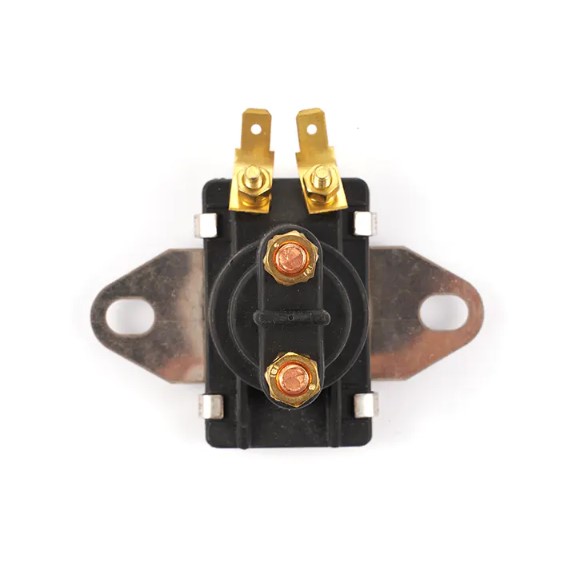
A clear photograph can also help when discussing the replacement with a supplier. It is useful to photograph the relay from several angles and include the connector and mounting area.
This information gives the supplier something concrete to work with instead of relying on a general description such as "relay for boat motor."
Check Electrical Compatibility Before Physical Fit
A relay can fit into a mounting location and still be unsuitable for the circuit.
Electrical compatibility should therefore be considered before physical appearance.
The first area to review is the relay coil and control side. The control circuit needs to provide the type of electrical input that the relay is designed to accept. If the control side does not match the application, the relay may not operate as intended.
The contact side also deserves attention. The relay contacts need to be appropriate for the circuit they control. A replacement should not be selected only because the housing fits.
This is particularly relevant when a relay is responsible for switching a circuit that experiences repeated operation. The electrical load, switching frequency, and circuit design all influence relay selection.
Instead of asking only, "Will this relay fit?", buyers should ask:
"Is this relay electrically compatible with the circuit it will control?"
That question can eliminate many unsuitable options before installation begins.
Why Terminal Layout Matters
Terminal configuration is one of the easiest details to overlook.
A replacement relay may have the same general shape but use a different terminal arrangement. Even when the number of terminals appears similar, their positions or functions can differ.
Terminal markings should therefore be compared carefully.
Depending on the relay design, markings may identify:
- Coil connections
- Common contact
- Normally open contact
- Normally closed contact
- Power input
- Switched output
The exact terminology and arrangement depend on the relay design. Buyers should follow the wiring diagram or identification information associated with the actual component rather than assuming that every relay uses the same layout.
Do Not Rely on Appearance Alone
Product photos are helpful for preliminary comparison, but they should not be the final basis for selection.
A housing may look nearly identical while the internal electrical configuration is different. Connector orientation can also create an installation problem when the replacement does not match the existing harness.
For this reason, terminal information is particularly useful when requesting a replacement from a manufacturer or distributor.
Compare the Mounting Method
A relay intended for an outboard application needs to be installed securely.
Depending on the electrical system, the component may use a socket, connector, bracket, mounting tab, or another arrangement. The available space around the relay also matters.
Before ordering, compare:
- Housing dimensions and overall shape
- Connector position
- Mounting points
- Retention method
- Clearance around the component
- Wire routing
- Access for future servicing
A replacement that technically works but creates strain on the wiring harness may not be a practical choice.
The relay should sit naturally in its intended position without forcing the connector, bending wires excessively, or interfering with nearby components.
Consider the Marine Environment
Outboard electrical systems operate around water, humidity, vibration, and changing temperatures.
This makes environmental protection an important part of relay selection.
A relay used in a marine environment may encounter moisture during normal operation, condensation during temperature changes, or occasional exposure to water depending on its location. The degree of exposure varies between installations, so the required protection should be considered according to the actual mounting environment.
Housing construction and sealing can influence how the component handles environmental exposure.
Moisture Is Not the Only Concern
Water is an obvious concern, but it is not the only factor.
Repeated vibration can place stress on connections and mounting points. Temperature changes can affect materials and electrical components. Long periods of inactivity followed by regular operation may also create different service conditions from those found in continuously operating equipment.
This is why a relay should be evaluated as part of the complete electrical environment rather than as an isolated component.
Look at the Connector and Wiring Harness
The relay itself is only one part of the connection system.
The connector and wiring harness also need to work with the replacement component.
Before purchasing, inspect the existing connector for:
- Terminal arrangement
- Locking structure
- Contact condition
- Wire position
- Connector orientation
- Signs of corrosion
- Loose connections
- Damaged insulation
If the original connector is damaged, replacing the relay alone may not resolve an electrical problem.
A loose or corroded connection can create symptoms that appear to be caused by the relay. This is why troubleshooting should include the surrounding wiring.
For replacement projects, providing the supplier with clear connector photos can make product identification easier.
Check the Relay's Function in the System
Knowing what the relay does can make replacement selection much easier.
A relay may be used for different functions depending on the outboard electrical architecture. For example, relay-controlled circuits can be associated with starting, power distribution, trim or tilt systems, accessories, or other electrical functions.
The application determines what the relay needs to handle.
A buyer should therefore identify the circuit before choosing the component.
Ask What Happens When the Relay Fails
Understanding the symptoms can also help with troubleshooting.
Depending on the circuit, a relay problem may result in:
- A function not operating
- Intermittent operation
- Unusual clicking
- Loss of power to a related circuit
- A circuit remaining active when it should not
- A problem that appears only under certain operating conditions
These symptoms do not automatically prove that the relay is faulty. Wiring, switches, connectors, fuses, grounds, and other components can create similar problems.
That distinction matters because replacing a relay without confirming the cause can lead to unnecessary parts replacement.
Review the Replacement Information Carefully
When buying from an aftermarket supplier, product information should provide enough detail to determine whether the component matches the intended application.
Useful product information may include:
| Information to Check | Why It Matters |
|---|---|
| Part identification | Helps compare the replacement with the original |
| Coil information | Confirms compatibility with the control circuit |
| Contact configuration | Helps match the switching function |
| Terminal layout | Reduces wiring mistakes |
| Connector style | Helps confirm harness compatibility |
| Mounting design | Supports proper physical installation |
| Environmental information | Helps evaluate the intended application |
| Application references | Provides additional identification support |
Not every supplier presents information in the same format. If a product page leaves an important detail unclear, contacting the supplier before ordering is usually more useful than guessing.
What About Electrical Ratings?
Electrical ratings deserve careful attention because a relay is responsible for switching an electrical load.
The relevant rating depends on the circuit, load type, switching conditions, and relay design. A circuit that looks simple from the outside may still have different requirements depending on what it controls.
Buyers should therefore compare the relay documentation with the electrical requirements of the original application.
Avoid treating a single rating as the only selection criterion.
A relay is a combination of electrical, mechanical, and environmental characteristics. The complete set of requirements matters more than one number printed on a product label.
Think About Inductive Loads
Some electrical loads behave differently when they are switched.
Motors, solenoids, coils, and similar devices can produce electrical effects during switching. These conditions may influence relay contact behavior and service life.
If the relay is controlling an inductive load, the supplier should know the actual application.
This is another reason why a clear application description is useful when requesting replacement parts.
Rather than simply saying that the component is for an outboard motor, explain what circuit the relay controls and provide the available information from the original part.
Check the Replacement Against the Original
Once a possible replacement has been identified, compare it systematically.
A simple checklist can help:
Identification
- Does the identification information correspond to the intended application?
- Does the supplier provide enough information to verify the replacement?
- Is the original part number available for comparison?
Electrical Side
- Does the coil configuration match?
- Does the contact arrangement correspond to the original function?
- Is the relay suitable for the circuit load?
- Does the switching arrangement make sense for the application?
Physical Side
- Does the housing fit the available space?
- Are the terminals positioned correctly?
- Does the connector match?
- Is the mounting method compatible?
Environmental Side
- Is the relay intended for the expected operating environment?
- Does the housing provide suitable protection?
- Could moisture or vibration affect the installation?
This checklist is simple, but it can make purchasing decisions more organized.
When Should You Contact the Supplier?
There are situations where product-page information is not enough.
Contact the supplier when:
- The original part number is unclear
- Several relays look similar
- The terminal arrangement is difficult to identify
- The application is unusual
- The connector differs from common versions
- The mounting location is restricted
- Environmental exposure is significant
- You are purchasing several replacement units
- You are building maintenance stock
A supplier that understands relay applications can help clarify which information is needed for identification.
For bulk buyers, it can also be useful to provide the application, original part information, quantity requirement, and preferred packaging or labeling details in one message.
That makes the conversation more efficient and reduces back-and-forth questions.
Aftermarket Does Not Mean One-Size-Fits-All
The aftermarket parts market covers many replacement applications, but that does not mean one relay can serve every outboard electrical system.
Engine design, electrical architecture, relay location, wiring, and circuit function can vary.
This is why buyers should avoid selecting a replacement simply because:
- The housing looks similar
- The product title contains "marine"
- The connector seems close
- Another buyer used it on a different application
- The price is lower
- The relay has the same general appearance
Those details can be useful clues, but they do not replace compatibility checks.
A Practical Buying Process
A straightforward purchasing process can make relay replacement easier.
Step 1: Identify the Original Relay
Record the part number, markings, terminal information, and application.
Step 2: Photograph the Component
Take clear photos of the housing, terminals, connector, and mounting arrangement.
Step 3: Identify the Circuit
Determine what function the relay controls.
Step 4: Compare Electrical Requirements
Review the control side, contact arrangement, and circuit load.
Step 5: Compare the Physical Design
Check the connector, mounting structure, housing, and available space.
Step 6: Consider the Environment
Review moisture exposure, vibration, temperature changes, and the relay's installation location.
Step 7: Confirm Unclear Information
Ask the supplier rather than making assumptions.
Step 8: Inspect the Replacement After Receiving It
Compare the new component with the original before installation.
This process is useful for individual replacement purchases as well as maintenance inventory planning.
Questions Buyers Can Ask Before Ordering
A short supplier checklist can save time.
Consider asking:
- Is this relay compatible with my application?
- Can you confirm the terminal arrangement?
- Does the connector match the original harness?
- Is the mounting method compatible?
- What information do you need to verify the replacement?
- Is the component intended for the expected environmental conditions?
- Can you provide a wiring or terminal diagram?
- Are there different versions with similar housings?
- How should the relay be identified when ordering again?
- Can replacement units be supplied consistently for future maintenance?
The goal is not to ask every question for every purchase. Instead, use the questions that address the uncertainty in your particular application.
Selecting a replacement relay for an outboard motor is easier when the decision starts with compatibility rather than appearance. Terminal layout, coil configuration, contact arrangement, connector design, mounting method, circuit function, and environmental conditions all deserve attention.
For buyers, the most useful habit is to gather the original relay information before searching for a replacement. A clear part number, photographs, terminal details, and application description can give a supplier a better basis for confirming a suitable component.
When those details are checked together, choosing an aftermarket relay becomes a more structured process. Instead of asking whether a relay simply looks like the old one, buyers can evaluate whether the replacement fits the electrical system, installation, and operating environment it is actually intended to serve.
For manufacturers and suppliers, clear product identification, application information, terminal documentation, and responsive technical communication can also make replacement sourcing easier for customers working with outboard electrical systems.
Related Products
Looking For Business Opportunity?
Request for a call today

No.128, Qianjin Road, Qianfeng Industrial Zone, Tangxia Town, Ruian, Zhejiang, China
-
-
Sophia Ye
-
Phone: +86-15305875100
-
WhatsApp: 15305875100
-
Email: [email protected]
-
- Mobile Terminal
Copyright 2024 Zhejiang Xiangrui Auto Electric Co., Ltd.

Relays And Modified Parts Factory
