- Tel: +86-15305875100
- E-mail: [email protected]
- Please contact us if you have questions.
CONTACT US


 English
 Español

Industry News
Oct 16,2026
How Do Industrial Panel Switches Fit Retrofitting Projects
Retrofitting an older machine rarely means replacing every component at once on the floor. In many facilities, the equipment still performs useful work, but its control interface may no longer match current operating needs. Buttons may be worn, labels may be unclear, and the arrangement of controls may make everyday operation genuinely less convenient than it should be.
This is where Industrial Panel Switches can become part of a practical upgrade plan worth considering. Replacing selected switches can change how operators interact with an existing machine without requiring the entire control cabinet getting rebuilt. The approach can prove especially useful when the mechanical structure of the equipment remains suitable for continued operation on the line.
A retrofit project needs careful planning because an old control panel is rarely an isolated collection of switches sitting side by side. Each control may connect with another component, and even a small interface change can affect how operators understand the machine. The goal is therefore not simply installing new switches, but creating a control interface that fits the existing equipment and the updated operating requirements it faces.
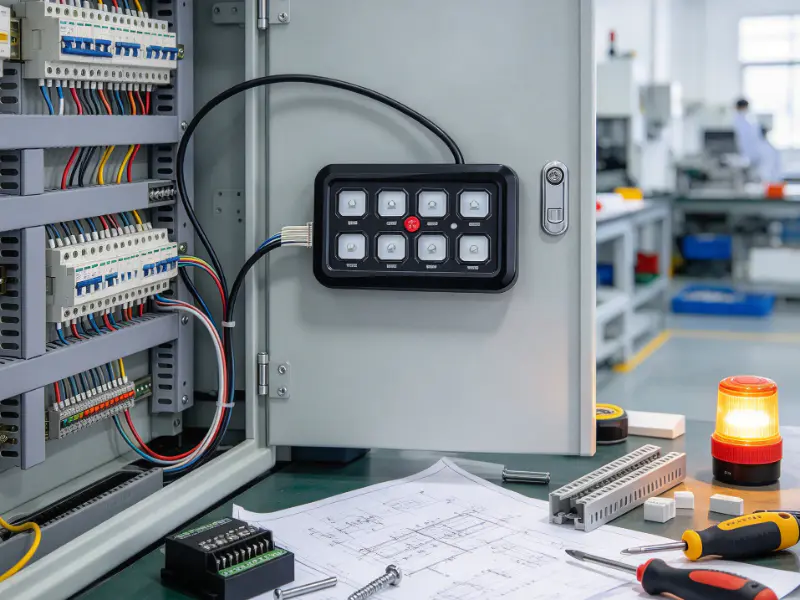
Why Do Retrofitting Projects Often Include Panel Switches?
Older equipment can remain mechanically useful while its control interface becomes genuinely less practical over years of service. A switch may show signs of wear after years of use, or its position may no longer make sense after production processes have changed around it.
Replacing selected controls can provide a way updating the operator interface without rebuilding the complete machine from scratch. This can reduce the amount of equipment that needs disturbing during an upgrade.
| Retrofit Situation | Possible Switch Upgrade Need |
|---|---|
| Worn control | Replace an aging switch |
| Changed machine function | Add or reconfigure a control |
| Poor panel layout | Rearrange operator controls |
| Unclear identification | Improve switch labeling |
| Updated control logic | Match the interface with the new system |
| Maintenance difficulty | Use more accessible controls |
The correct approach depends on the condition of the existing panel and the purpose of the retrofit at hand. A switch replacement should support the wider upgrade, rather than becoming an isolated change made in a vacuum.
How Can Industrial Panel Switches Update an Older Control Cabinet?
An older control cabinet may contain a mixture of components from different stages of the machine's service life stretching back years. Some controls may still be useful, while others may no longer fit the way the equipment is operated today.
Industrial Panel Switches can provide a practical point for modernization on the floor. Engineers can review which controls remain necessary and which ones need replacing, relocating, or adding fresh.
This creates an opportunity rethinking the operator interface without automatically replacing the entire cabinet outright. The internal control structure can remain where appropriate, while the visible interface gets adjusted around current needs.
The process may involve reviewing existing controls first and identifying functions that remain active. Checking which switches need replacement comes next, followed by reviewing the panel layout itself. Matching new controls with the existing system rounds out the middle stages, followed by testing the updated interface before normal operation resumes.
The important point is that a retrofit should get based on the actual machine, rather than on a generic panel layout borrowed from elsewhere.
What Should Engineers Check Before Replacing an Existing Switch?
Replacing a switch may look simple at a glance, but the existing control should get understood before any change gets made to it. Its function, location, connection, labeling, and relationship with other controls all matter here.
The physical opening in the panel is also relevant to check early. A replacement component needs fitting the available space and working with the surrounding layout already in place. If the new switch has a genuinely different physical arrangement, additional panel work may become required down the line.
The control function should also remain clear throughout the process. A switch that looks similar to the old one may not perform the same role within the updated system running behind it.
Existing Switch Assessment
- Existing switch function
- Panel opening and mounting arrangement
- Control location and operator access
- Existing wiring and connections
- Nearby components and available space
- Labeling requirements and maintenance access
This information gives the engineering team a genuinely clearer picture before modifications begin on the panel.
How Can Panel Layout Changes Improve Retrofit Work?
A retrofit is an opportunity reconsidering how operators interact with the machine day to day. Older panels may have gotten arranged according to the original production process, while the current workflow may have changed considerably since then.
Controls that are used frequently may be genuinely difficult to reach in their current spot. Related functions may be separated across the panel unnecessarily. Some switches may also be positioned where their labels are genuinely difficult to read from a normal operating position.
Reorganizing the panel can make the interface genuinely easier to understand for whoever's standing there. The goal isn't adding controls simply because there's available space open on the panel. It's placing necessary functions in a genuinely logical arrangement.
| Layout Issue | Retrofit Direction |
|---|---|
| Frequently used control is hard to reach | Review its position |
| Related controls are separated | Consider grouping them |
| Labels are difficult to read | Update identification |
| Unused controls occupy space | Review whether they are still needed |
| New function has no clear location | Reserve a suitable panel area |
A genuinely better arrangement can also help maintenance staff understanding the panel when service becomes required later.
Can Industrial Panel Switches Help Reconfigure Machine Interfaces?
Machine functions can change over time as production needs shift. A production process may get modified, a control sequence may get updated, or an auxiliary function may get introduced partway through the machine's life.
When this happens, the original panel may no longer provide the right interface for the job at hand. New Industrial Panel Switches can become part of the reconfiguration process taking shape.
The new controls should reflect the updated machine functions accurately. If an old switch no longer has a useful role, leaving it in place may create genuine confusion for the next operator. If a new machine function requires operator input, the panel may need another control added.
Reconfiguration should therefore consider the complete interface, rather than simply adding a switch wherever there's free space available.
The operator should be able understanding which control performs which function without relying on assumptions based on the previous panel design left behind.
How Does Switch Selection Affect Retrofit Compatibility?
A retrofit component needs fitting both the physical panel and the control system behind it working together. Selecting a switch based only on appearance can create problems during installation that surface later.
Compatibility includes the switch's intended function, mounting arrangement, connection method, and interaction with the existing control structure already running. The surrounding environment can also influence the selection made.
For example, a panel located in a clean indoor control room may have genuinely different requirements from one installed near machinery, dust, moisture, or frequent operator activity throughout a shift.
The switch should therefore get considered as part of the complete installation, rather than in isolation.
Switch Compatibility Review
- What function will the switch perform?
- Where will the switch be mounted?
- How will operators interact with it?
- Which existing component will it replace?
- How will it connect with the control system?
- What environmental conditions surround the panel?
- Can maintenance staff access it easily?
These questions help connect product selection with retrofit conditions on the ground.
What Happens When an Old Control Panel Has Limited Space?
Space can become a genuinely significant issue in older control cabinets built years ago. The original panel may have gotten designed around components that are no longer available or no longer suitable for the updated machine running today.
Adding new controls without reviewing the available space can make the panel genuinely crowded fast. This may affect labeling, access, maintenance, and operator visibility across the board.
A retrofit can therefore involve removing unnecessary controls before installing new ones in their place. This creates a genuinely cleaner starting point for the updated interface taking shape.
The external appearance of the panel may also need attention during the process. New switches should sit naturally within the existing layout, rather than looking like unrelated additions bolted on.
A compact panel still needs enough room for operators and maintenance staff working safely and comfortably around it.
How Can Retrofitting Reduce Disruption to Existing Equipment?
Industrial equipment often supports an active production process running around the clock. Taking a machine out of service for a major rebuild can affect schedules and coordination between production and maintenance teams sharing the floor.
A targeted control-panel retrofit can provide another approach worth considering. Instead of changing every machine component, the project can focus on the controls that actually need attention right now.
This doesn't mean every retrofit should be small in scope. Some machines may require genuinely extensive modification depending on their condition. The useful point is that the scope can get matched to the actual condition of the equipment at hand.
A controlled retrofit plan can separate the work into stages worth tracking.
| Retrofit Stage | Main Focus |
|---|---|
| Assessment | Understand the existing panel |
| Planning | Define required changes |
| Component selection | Match new switches to the application |
| Panel modification | Prepare the control interface |
| Installation | Fit and connect the new controls |
| Testing | Check the updated operation |
| Handover | Provide clear information for users |
This staged approach can make it genuinely easier for engineering and maintenance teams coordinating the work between shifts.
Why Does Labeling Matter After a Switch Retrofit?
A new switch can change the appearance of a control panel, but the operator still needs understanding what the control does when they reach for it. Clear labeling becomes particularly important when the function of a switch has changed from before.
An old label may no longer match the updated machine sitting in front of it. Removing the switch without updating nearby labels can create another source of confusion for whoever's operating it next.
Labels should correspond with the current control functions accurately. They should also get positioned where operators can read them without unnecessary movement or squinting.
A retrofit is therefore not complete simply because the new switch has gotten installed on the panel. The surrounding information on the panel should also reflect the updated interface running behind it.
This can help both daily operators and maintenance personnel understanding the modified equipment they're working with.
How Should Engineers Handle Existing Wiring During a Retrofit?
Existing wiring can be one of the genuinely more important areas reviewing during a control-panel upgrade. Older equipment may contain connections that reflect previous modifications, repairs, or changes in machine function made over the years.
A new switch needs fitting the intended control arrangement already in place. Simply connecting a replacement based on the physical position of the old switch may not stay suitable if the control logic has changed since then.
Engineers can document the existing connections before making modifications to anything. This provides a reference when reviewing which circuits remain relevant and which ones need changing.
Installation consideration
Any electrical modification should get carried out by appropriately qualified personnel and according to the applicable installation and safety requirements in force.
The wiring review should also consider future maintenance down the road. Clear identification and organized connections can make later service work genuinely easier for whoever inherits the panel.
What Role Does Testing Play in Panel Switch Retrofitting?
Testing helps confirming that the updated interface behaves as intended before the machine returns to normal operation on the floor. A switch may fit physically but still require further checking within the complete control sequence running behind it.
Testing can examine whether each control produces the expected machine response when activated. It can also help identifying unclear labels, unexpected interactions, or controls that operators may find genuinely difficult to use in practice.
A practical test can include checking each modified control alongside confirming the related machine response. Reviewing switch identification matters next, along with checking operator access. Observing the panel during normal use rounds out the process, followed by recording any required adjustments needed.
Testing should consider both individual functions and the overall user experience together. A switch may work correctly on its own while still being genuinely inconvenient when used alongside other controls nearby.
How Can Maintenance Teams Benefit From a Reconfigured Panel?
Maintenance staff interact with control panels in a genuinely different way from everyday operators running the machine. They may need identifying a control quickly, tracing a function, replacing a component, or investigating an unexpected machine response late at night.
A well-planned retrofit can make these tasks genuinely easier by creating a clearer relationship between controls and machine functions across the panel.
Consistent labeling and logical grouping can reduce confusion for whoever's called in. Accessible switches can also make inspection and replacement genuinely less disruptive to the ongoing process.
Documentation proves useful as well throughout this. Updated drawings, control descriptions, and component information can help maintenance personnel understanding what changed during the retrofit process.
This is particularly important when an older machine has gone through several modification stages over its service life stretching back years.
What Should Buyers Consider When Sourcing Industrial Panel Switches?
Purchasing teams need evaluating retrofit components according to the actual project at hand, rather than treating all panel switches as interchangeable parts.
The existing panel structure, intended control function, installation environment, and maintenance plan should all get considered before placing an order with a supplier.
Product documentation can also make a genuine difference during evaluation. Buyers may need clear information about the switch function, mounting arrangement, connection method, and intended application it's built for.
For retrofit projects, communication with the supplier can prove especially useful because the component may need replacing an existing control, rather than fitting into a completely new panel built fresh.
Industrial Panel Switch Purchasing Checklist
- Confirm the required switch function.
- Review the existing panel arrangement.
- Check physical and mounting compatibility.
- Confirm the intended control connection.
- Consider the operating environment.
- Review labeling and installation needs.
- Consider future replacement and maintenance.
This approach keeps purchasing decisions genuinely connected with the actual retrofit work underway.
How Can Manufacturers Support Custom Retrofit Requirements?
Not every older control panel follows a standard layout built to spec. Some machines may have unusual switch positions, limited mounting space, or a control interface that's gotten modified several times over its life.
Manufacturers can support these situations by providing clear product information and discussing the intended application with buyers directly. Custom configurations may also get considered when the project requires a particular arrangement not found off the shelf.
The important point is that customization should solve a defined installation problem at hand. Adding unnecessary variations can make procurement and future maintenance genuinely more complicated down the road.
A useful manufacturer relationship focuses on the actual retrofit conditions, including panel layout, control function, installation environment, and expected maintenance going forward.
Clear communication before production can help reducing misunderstandings during installation later.
How Can Retrofitting Prepare Older Machines for Future Changes?
A control-panel retrofit can do genuinely more than replace worn components sitting in the cabinet. It can also provide an opportunity creating a clearer interface that's genuinely easier to modify when machine functions change again down the road.
The future needs of the equipment shouldn't get guessed in detail ahead of time. However, engineers can avoid unnecessarily crowded layouts and unclear control arrangements that create headaches later.
Leaving the panel organized and documenting the changes can make later modifications genuinely easier understanding for whoever picks up the work next. A future upgrade team can then identify which controls belong to the original machine and which got added during previous retrofit work along the way.
This creates a genuinely more manageable maintenance history for equipment that continues evolving over its service life.
Planning an Industrial Control Panel Retrofit
For facilities that rely on older machines for ongoing production, Industrial Panel Switches can serve as practical components within a broader retrofit strategy. They can support control interface updates, panel reconfiguration, replacement of worn controls, and adjustments to changing machine functions as they arise.
Before selecting replacement switches, review the existing panel, verify electrical and mechanical compatibility, and establish a suitable testing and documentation process. Matching the component to the real installation conditions helps keep the retrofit focused on the needs of the machine and its operators.
Related Products
Looking For Business Opportunity?
Request for a call today

No.128, Qianjin Road, Qianfeng Industrial Zone, Tangxia Town, Ruian, Zhejiang, China
-
-
Sophia Ye
-
Phone: +86-15305875100
-
WhatsApp: 15305875100
-
Email: [email protected]
-
- Mobile Terminal
Copyright 2024 Zhejiang Xiangrui Auto Electric Co., Ltd.

Relays And Modified Parts Factory
