- Tel: +86-15305875100
- E-mail: [email protected]
- Please contact us if you have questions.
CONTACT US


 English
 Español

Industry News
May 15,2026
What Types Of RV Door Lock Are Commonly Used
RV travel brings a sense of freedom, but also a need for dependable security. The door lock is one of the most direct protection points in any RV setup. It separates the living space from the outside environment, and it also controls access during stops, parking, and overnight stays.
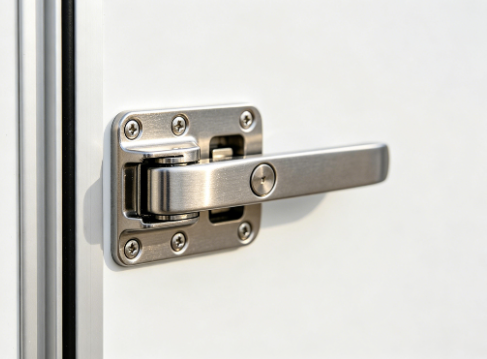
Different RV door lock types have developed to match changing travel habits and design expectations. Some focus on simplicity. Others add convenience or layered protection. Each type reflects a different balance between access, safety, and ease of use.
Understanding these common lock types helps explain how RV security systems are structured today.
Why Do RV Door Locks Come In Different Types?
RV structures vary in size, layout, and usage style. Some units are compact and used for short trips. Others function as long-term mobile living spaces. These differences influence how door locks are designed.
A single locking method cannot meet every situation. Travel environments change frequently. Doors may face vibration during movement, weather exposure during parking, and repeated use throughout the day.
Different lock types respond to these conditions in different ways. Some prioritize quick access. Others focus on stable closure. A few combine multiple functions in one system.
The variety is not random. It reflects the need to support both mobility and security in one structure.
What Are Mechanical RV Door Locks?
Mechanical door locks are among the most widely used types in RV systems. They rely on a physical key and internal locking components. No external power is required.
Their structure is straightforward. A key turns a mechanism that secures or releases the latch. This simplicity makes them familiar to many users.
Mechanical locks are often used in standard RV doors. They are valued for their direct operation and consistent behavior.
They do not depend on electronic systems. This means they can still function in situations where power is limited. For many users, this independence is an important feature.
Maintenance usually involves checking alignment and keeping moving parts clean. Over time, wear may appear, but the basic function remains easy to understand and manage.
How Do Electronic RV Door Locks Work?
Electronic RV locks introduce a different approach to access control. Instead of relying only on a physical key, they use electronic input methods.
These may include keypads, cards, or remote access systems. The goal is to reduce dependence on traditional keys while improving convenience.
The internal mechanism still performs a locking action, but the trigger comes from an electronic signal. This allows for faster access in many situations.
Electronic locks are often used in RVs where frequent entry and exit occurs. They help reduce the need to carry multiple keys.
At the same time, they require a stable power source. When power is not available, backup methods are usually considered.
This type of lock reflects a shift toward more flexible access systems in mobile living environments.
What Are Keyless RV Door Locks?
Keyless door locks build on electronic systems but remove the need for physical keys entirely in daily use. Entry is based on input codes or stored access methods.
This design reduces reliance on traditional key handling. Users can enter a code or use a digital method to unlock the door.
Keyless systems are often chosen for convenience. They also reduce the risk of lost keys during travel.
The structure may include a keypad on the door surface. Inside, a control unit interprets input and activates the locking mechanism.
While the idea is simple, the behavior is consistent. Input leads to access. Incorrect input prevents entry.
This clear response pattern makes keyless systems easy to operate in everyday use.
How Do Multi-Point RV Door Locks Improve Security?
Multi-point locks use more than one locking position along the door frame. Instead of securing a single point, they distribute locking force across multiple areas.
This helps improve door stability when closed. It reduces movement and increases resistance to external pressure.
These systems are often used in larger RV doors or in designs where extra reinforcement is preferred.
The operation may still be simple for the user. One action can activate multiple locking points at once.
The internal structure, however, is more complex. It connects several locking elements into one coordinated movement.
This type of lock is often associated with improved structural support rather than convenience alone.
What Role Do Sliding RV Door Locks Play?
Some RV designs include sliding doors. These require a different locking approach compared to standard hinged doors.
Sliding door locks are designed to secure horizontal movement. They prevent the door from shifting along its track when closed.
The locking mechanism often engages directly with the frame or track system. This helps hold the door in place during travel or stationary use.
In many cases, sliding locks are combined with other locking methods. This creates a layered structure of protection.
The design must account for movement and vibration. A stable hold is important to maintain door position under changing conditions.
How Are Handle Integrated RV Door Locks Used?
Some RV locks are built into the handle itself. This integrated design combines gripping and locking into one unit.
The user interacts with a single component to open or secure the door. This reduces the number of separate parts on the door surface.
Integrated locks are often used in modern RV designs where space and appearance are both considered.
The internal mechanism connects handle movement with locking action. When the handle is engaged, the lock responds accordingly.
This type of system supports a compact layout. It also simplifies the user experience during repeated use.
What About Deadbolt Style RV Door Locks?
Deadbolt-style locks focus on strong physical engagement. A solid bolt moves into a fixed position inside the door frame.
This creates a direct locking barrier. The movement is simple, but the result is firm closure.
Deadbolt systems are often used alongside other lock types. They add an extra layer of security beyond standard latching.
The operation is usually manual or combined with a control mechanism. Once engaged, the bolt stays in place until released.
This type of lock is often associated with stationary security, especially when the RV is parked for longer periods.
How Do Different RV Door Lock Types Compare?
Each RV lock type serves a different purpose. Some focus on convenience. Others focus on structure or layered protection.
| Lock Type | Main Feature | Typical Use Scenario |
|---|---|---|
| Mechanical Lock | Simple manual operation | Basic RV entry doors |
| Electronic Lock | Controlled access system | Frequent entry and exit use |
| Keyless Lock | Code-based entry | Travel convenience setups |
| Multi-Point Lock | Multiple locking positions | Larger or reinforced doors |
| Sliding Door Lock | Track-based security | RVs with sliding door designs |
| Integrated Handle Lock | Combined function design | Compact modern RV layouts |
| Deadbolt Lock | Strong fixed engagement | Stationary security focus |
This comparison shows that no single design dominates all situations. Each type fits a specific need within RV usage patterns.
How Do Usage Conditions Influence Lock Selection?
RV environments are not fixed. A vehicle may move through different climates, road conditions, and parking situations.
Frequent travel may favor locks that are simple and quick to use. Long-term parking may require stronger physical security.
Space inside the door also affects design choice. Compact layouts often benefit from integrated systems. Larger doors may support multi-point or reinforced structures.
User preference also plays a role. Some prefer traditional mechanical systems. Others choose electronic or keyless options for convenience.
The selection process often reflects a balance between daily use and expected conditions.
How Do Maintenance Needs Differ Between Lock Types?
Different lock structures require different levels of attention.
Mechanical systems often need periodic cleaning and lubrication. Electronic systems may require power checks and input system inspection. Keyless systems benefit from regular code management and surface care.
Multi-point and deadbolt systems may need alignment checks over time. Sliding locks require attention to track conditions.
Maintenance is not always complex. It is often about consistency. Small checks can help maintain smooth operation.
RV door locks continue to evolve alongside mobile living design. Their variations reflect different ways of balancing access, structure, and security within limited space.
Related Products
Looking For Business Opportunity?
Request for a call today

No.128, Qianjin Road, Qianfeng Industrial Zone, Tangxia Town, Ruian, Zhejiang, China
-
-
Sophia Ye
-
Phone: +86-15305875100
-
WhatsApp: 15305875100
-
Email: [email protected]
-
- Mobile Terminal
Copyright 2024 Zhejiang Xiangrui Auto Electric Co., Ltd.

Relays And Modified Parts Factory
