- Tel: +86-15305875100
- E-mail: [email protected]
- Please contact us if you have questions.
CONTACT US


 English
 Español

Industry News
May 08,2026
What Is A Dual Battery Isolator And How Does It Work
Modern vehicles and mobile power systems often rely on more than one battery. A single battery may not be enough to support both starting power and long-term electrical use. This is where a dual battery isolator comes into the picture. It helps manage how energy moves between two batteries while keeping their roles separate.
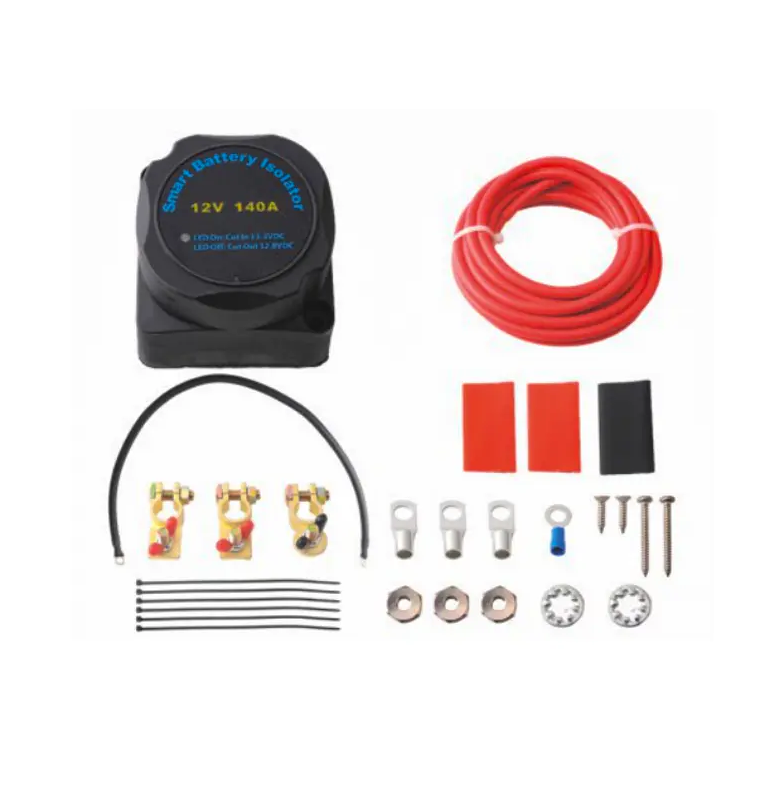
In simple terms, it acts like a controlled gate. One battery handles starting power. The other supports additional electrical needs. The isolator makes sure they work together without interfering with each other.Across automotive, marine, and off-grid setups, this type of system has become a practical solution for stable power management.
Why Are Dual Battery Systems Used In The First Place?
A single battery has limits. It can start an engine and support basic electrical functions. But when extra devices or longer usage times are involved, the demand increases.
A second battery helps distribute this load. One battery focuses on starting the engine. The other supports accessories such as lighting, cooling, or onboard electronics.
Without separation, both functions may drain the same battery. This can lead to reduced starting power when it is needed most.
A dual battery setup solves this by dividing responsibilities. The isolator ensures this division stays consistent.
What Role Does A Dual Battery Isolator Play?
A dual isolator connects two batteries while controlling how power flows between them. It allows charging when conditions are right, but prevents unwanted discharge.
When the engine is running, both batteries may receive charge. When the engine is off, the isolator blocks power transfer in the opposite direction. This helps protect the starting battery from being drained by auxiliary devices.
The key idea is balance. Each battery has a role, and the isolator helps maintain that structure.
In many systems, this component sits quietly in the background. It does not require frequent attention. Yet its function is central to system stability.
How Does A Dual Battery Isolator Work In Practice?
The working process is based on monitoring and control of power flow. The isolator observes the electrical condition of the system and reacts accordingly.
When power is available from the engine or charging source, the isolator allows current to reach both batteries. This helps keep them charged during operation.
When power drops or the engine stops, the isolator changes its state. It separates the batteries so that one cannot drain the other.
This switching happens automatically in many systems. The goal is to avoid manual control while maintaining stable energy distribution.
The result is a system that adapts to changing conditions without constant user input.
What Happens During Charging And Discharging?
Battery behavior changes depending on whether energy is being added or used.
During charging, both batteries may receive power. The isolator ensures that the charge flows in a controlled direction. This helps maintain a balanced energy state.
During discharging, only the designated battery supplies power to accessories. The starting battery remains protected.
This separation reduces the risk of unexpected power loss. It also helps extend usable time for auxiliary systems.
The following table gives a simple view of how the process is divided:
| System State | Power Flow Behavior | Battery Role Distribution |
|---|---|---|
| Engine running | Power distributed to both units | Both batteries receive charge |
| Engine off | Power isolated between batteries | Starting battery protected |
| Accessory use only | Auxiliary battery supplies load | Secondary battery active |
This structure supports predictable energy behavior in different conditions.
Where Are Dual Battery Isolators Commonly Used?
Dual isolators appear in many mobile and stationary systems. Their use is driven by the need for stable and separated power sources.
In vehicles, they support additional electrical equipment without affecting starting ability. In marine environments, they help manage onboard systems that run independently of engine power. In mobile setups, they support extended use of lighting, communication, or cooling systems.
Common application areas include:
- Vehicles with added electrical accessories
- Marine systems requiring separate power zones
- Mobile work setups with off-grid energy needs
- Recreational systems with extended usage demands
Each of these environments benefits from clear separation between power sources.
Why Is Power Separation Important For System Stability?
When all devices rely on a single battery, energy demand can become uneven. One system may consume more power than expected. This can affect the ability to restart or maintain essential functions.
Power separation reduces this risk. The starting battery remains focused on ignition tasks. The auxiliary battery handles additional load.
This division supports consistency. Even if one part of the system is heavily used, the other remains unaffected.
In practical terms, this means fewer unexpected interruptions and more predictable system behavior.
How Does A Dual Battery Isolator React To System Changes?
Electrical systems are not static. Power demand changes depending on usage. A dual isolator responds to these changes in real time.
When voltage rises, it may indicate that a charging source is active. The isolator then connects both batteries to receive energy.
When voltage drops, it signals that charging has stopped. The isolator then separates the batteries to prevent reverse flow.
This reaction does not require manual input. It relies on continuous monitoring of system conditions.
The process is designed to be responsive rather than fixed. This helps maintain balance even when usage patterns shift.
What Problems Can Occur Without A Dual Battery Isolator?
Without separation between batteries, several issues may appear over time.
One common issue is unintended battery drain. Auxiliary devices may continue to use power even when the engine is off. This can reduce the ability to start the system later.
Uneven charging is another concern. One battery may receive more charge than the other. This can lead to imbalance in performance.
In some cases, both batteries may interact in ways that reduce overall efficiency. Energy may flow in unintended directions, creating instability.
These issues often develop gradually. They may not be noticeable at first, but can affect reliability later.
How Is Installation And Integration Typically Handled?
Installation of a dual isolator depends on system layout. The main idea is to place it between two batteries in a way that allows controlled energy flow.
Wiring must be arranged so that each battery maintains its designated role. The starting battery connects to engine-related functions. The auxiliary battery connects to additional loads.
Placement is also important. The isolator is usually installed in a location that supports stable connection and easy access for inspection.
Careful integration helps ensure that the system operates as intended. Poor arrangement may reduce effectiveness or create imbalance.
How Does It Support Long-Term Energy Management?
Over time, consistent power management becomes important. Batteries naturally lose efficiency with repeated use. A structured system helps reduce unnecessary strain.
A dual isolator supports this by controlling how energy is shared. It prevents one battery from carrying all the load. It also avoids deep discharge situations that can affect performance.
By maintaining separation during idle periods and controlled sharing during operation, the system remains more stable over time.
This approach helps users manage energy in a more predictable way, especially in environments where recharging opportunities may be limited.
What Makes Dual Battery Systems Relevant In Modern Power Design?
As electrical systems become more integrated into mobile environments, energy management becomes more important. Devices are no longer limited to simple functions. They often include multiple power-consuming components.
Dual battery systems fit into this evolution. They offer a structured way to handle increasing demand without overloading a single source.
The isolator acts as the control point. It ensures that energy is distributed in a way that matches system needs.
In many designs, this approach supports flexibility. Systems can be expanded without changing the core power structure.
Dual battery isolators continue to play a steady role in managing separated power systems. Their function is based on simple control of energy flow, yet their impact can be seen across a wide range of applications where stability and balance are required.
Related Products
Looking For Business Opportunity?
Request for a call today

No.128, Qianjin Road, Qianfeng Industrial Zone, Tangxia Town, Ruian, Zhejiang, China
-
-
Sophia Ye
-
Phone: +86-15305875100
-
WhatsApp: 15305875100
-
Email: [email protected]
-
- Mobile Terminal
Copyright 2024 Zhejiang Xiangrui Auto Electric Co., Ltd.

Relays And Modified Parts Factory
