- Tel: +86-15305875100
- E-mail: [email protected]
- Please contact us if you have questions.
CONTACT US


 English
 Español

Industry News
May 01,2026
What Materials Are Commonly Used in Yacht Accessories
Yacht accessories cover a wide range of components used on board, from functional fittings to comfort-related items. While designs may look simple from the outside, the materials behind them carry much of the real importance. They influence how accessories perform, how long they last, and how they respond to marine environments.
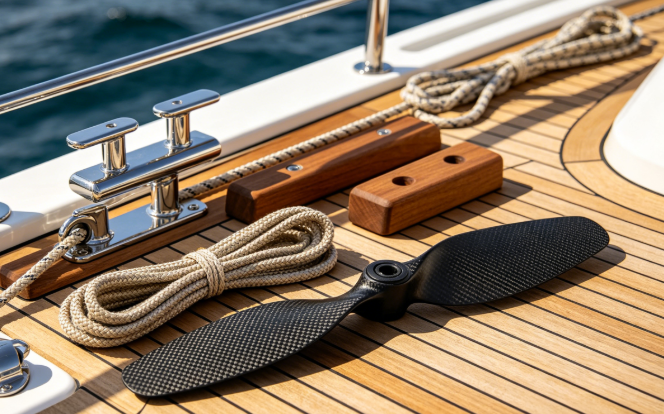
Salt, sunlight, moisture, and constant movement create a setting where ordinary materials often struggle. Because of this, material selection becomes a key part of yacht accessory design rather than a secondary detail.
Why do materials matter so much in marine environments?
A yacht is rarely in a stable environment. Conditions change with weather, water exposure, and continuous motion. Even accessories that appear minor are exposed to these influences over time.
Materials used in this setting must handle more than appearance or basic function. They need to stay stable under repeated exposure to moisture and shifting temperatures. They also need to resist gradual wear that comes from movement and contact.
If the material choice is not suitable, small changes begin to appear. Surfaces may lose strength, fittings may loosen, and performance may slowly decline. That is why material selection is treated as a core part of design thinking in marine applications.
What metals are commonly used in yacht accessories?
Different materials are selected based on function, environment, and expected wear. Each one plays a different role in maintaining stability and usability on board.
| Material Type | Common Use Areas | Main Characteristics in Marine Use |
|---|---|---|
| Metal | Railings, fittings, connectors | Strong structure, stable support, requires corrosion consideration |
| Plastic | Covers, interior parts, lightweight components | Flexible shaping, reduced weight, sensitive to sunlight exposure |
| Rubber | Seals, vibration control, protective edges | Flexible response, helps reduce movement impact, supports sealing |
| Composite materials | Panels, structural parts, mixed-use components | Balanced strength and weight, adaptable to varied conditions |
Each material brings its own behavior. In real applications, they are often used together rather than separately. This combination helps balance strength, flexibility, and environmental response.
How are plastic materials used in yacht accessories?
Plastic materials appear frequently in yacht because of their versatility and adaptability. They can be shaped into different forms and used in both visible and hidden components.
In marine environments, plastic is often chosen for:
- Protective covers
- Interior fittings
- Lightweight structural parts
- Insulating components
One advantage of plastic is its ability to reduce weight. On a yacht, weight distribution matters for balance and movement.
Plastic materials also help reduce direct contact between different surfaces. This can lower wear in areas where parts move against each other.
However, long-term exposure to sunlight and moisture can gradually influence surface condition, so selection and placement are important.
Why is rubber important in yacht accessory design?
Rubber plays a quiet but essential role. It is often used where flexibility, sealing, or cushioning is needed.
Common applications include:
- Seals around openings
- Vibration control points
- Flexible connectors
- Protective edges
Rubber helps absorb movement. On a yacht, constant motion is normal. Without flexible materials, rigid parts would experience more stress over time.
Sealing is another important function. Rubber helps reduce water intrusion in areas that need protection. Even small gaps can affect comfort or equipment stability, so sealing materials become part of overall system reliability.
What role do composite materials play?
Composite materials are made by combining different elements to achieve a better overall balance of properties. Instead of depending on a single material, they bring together several useful characteristics into one structure.
In accessories, composites are commonly chosen in areas where both strength and lighter weight matter. They often appear in:
- Structural panels
- Decorative surfaces
- Support components
- Exterior fittings
The performance of composites depends on how they are manufactured and how they react to the surrounding conditions. Their increasing use reflects a preference for materials that can satisfy multiple needs at once.
They are frequently selected when a good balance between durability and weight control is required.
How do material choices affect comfort on board?
Comfort on a yacht is not only about layout or design. Materials influence how spaces feel during use.
Smooth surfaces, stable fittings, and quiet movement all contribute to onboard experience. Materials that reduce vibration or limit noise can make a noticeable difference during travel.
Soft-touch materials are sometimes used in interior areas where frequent contact occurs. Harder materials are placed in structural zones where stability is more important.
This separation helps create a more balanced environment, where function and comfort work together rather than compete.
What challenges come from material selection in marine conditions?
Selecting materials for yacht is not without challenges. The environment introduces multiple pressures at the same time.
Some common challenges include:
- Gradual surface wear from moisture exposure
- Changes caused by continuous sunlight
- Movement-related stress from constant motion
- Interaction between different material types
Each material reacts differently. A combination that works well in one area may behave differently in another.
This is why material selection often involves testing under practical conditions rather than relying only on initial appearance or strength.
How do different materials interact with each other?
In yacht accessories, materials rarely work alone. They often come into contact with each other through joints, fittings, or layered structures.
When two materials behave differently under similar conditions, small differences can appear. These differences may affect movement, alignment, or surface condition over time.
For example, a rigid material paired with a flexible one may create uneven stress if not properly balanced. On the other hand, well-matched combinations can support smoother operation and reduce wear.
Understanding these interactions helps improve long-term stability.
How are environmental conditions shaping material trends?
Marine environments play a big role in how materials are chosen and developed for accessories. Constant exposure to salt, sunlight, and constant movement pushes designers toward materials that can hold up and perform reliably over long periods.
There is also a stronger emphasis on lowering maintenance requirements. Materials that need less frequent upkeep, adjustment, or replacement are becoming more popular in yacht accessory design.
Another noticeable trend is the combining of different materials. Rather than using just one material, designers often mix several to get the right balance of performance under varying conditions.
This direction comes from practical, real-world needs rather than just theoretical ideas.
What Does Material Durability Mean in Practical Use?
Durability is not just about how long a material lasts before it breaks. It also includes how consistently it performs throughout its working life.
A material might still look physically intact, but it can still change in surface feel, flexibility, or how it responds to use. These smaller changes can noticeably affect how a yacht accessory works day to day.
In yacht environments, durability is often measured by how stable the material stays over time, not just how tough it is. Materials that keep steady behavior even after repeated exposure to marine conditions tend to be better suited for long-term use.
How do designers balance function and material choice?
Designers working with yacht often make decisions based on more than one factor. Function, weight, comfort, and environmental response all come into play.
A material that performs well in one area may need adjustment in another. This leads to careful balancing rather than single-factor selection.
Sometimes the goal is strength. Sometimes it is flexibility. In many cases, it is a combination of both.
This balancing process shapes how yacht accessories evolve over time, especially as expectations for onboard experience continue to expand.
Related Products
Looking For Business Opportunity?
Request for a call today

No.128, Qianjin Road, Qianfeng Industrial Zone, Tangxia Town, Ruian, Zhejiang, China
-
-
Sophia Ye
-
Phone: +86-15305875100
-
WhatsApp: 15305875100
-
Email: [email protected]
-
- Mobile Terminal
Copyright 2024 Zhejiang Xiangrui Auto Electric Co., Ltd.

Relays And Modified Parts Factory
