- Tel: +86-15305875100
- E-mail: [email protected]
- Please contact us if you have questions.
CONTACT US


 English
 Español

Industry News
Dec 19,2025
Use of Relay Factory Relays in Low Current Circuits
Introduction to High-Frequency and Low-Current Applications
A Relay Factory produces a variety of relays for industrial, commercial, and residential electrical systems. A common question arises regarding the use of these relays in high-frequency signals or circuits with very low current. Understanding the limitations and proper applications of relays in these scenarios is essential to ensure reliable performance, prevent signal loss, and avoid unintended circuit behavior.
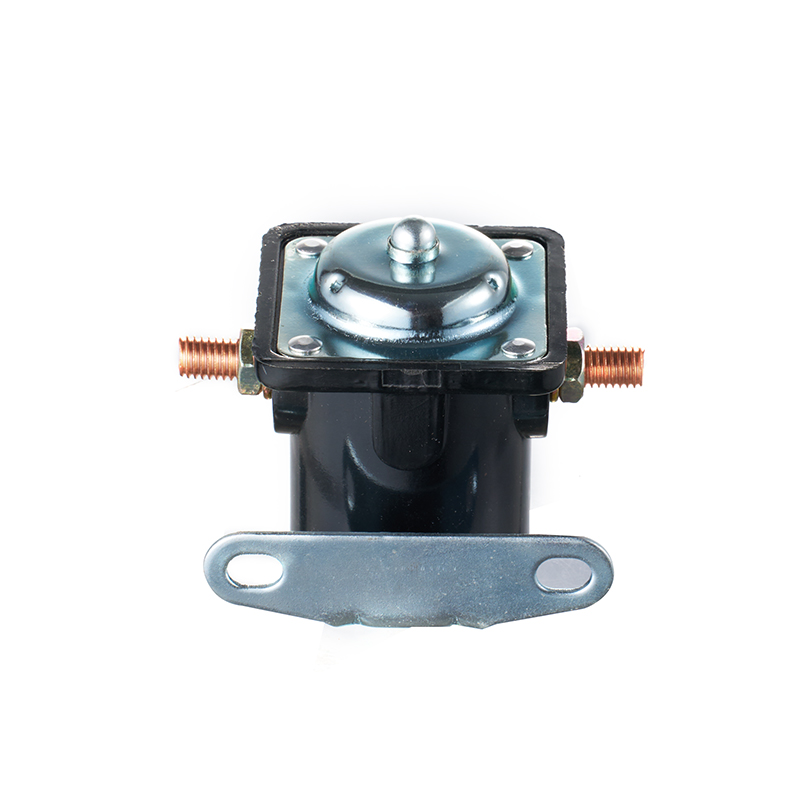
Challenges of Using Relays in High-Frequency Circuits
Contact Bounce and Switching Noise:
Mechanical relays typically have moving contacts that can produce bounce during opening or closing. In high-frequency circuits, this bounce can generate noise and signal distortion, affecting circuit accuracy and data integrity.
Limited Switching Speed:
Standard electromagnetic relays have finite response times. High-frequency signals may exceed the relay’s ability to switch on and off quickly, resulting in missed cycles or signal attenuation.
Parasitic Capacitance and Inductance:
Relay contacts and coil wiring introduce small capacitances and inductances. At high frequencies, these parasitic elements can interfere with the signal, causing phase shifts or amplitude reduction.
Considerations for Low-Current Circuits
- Operating Current:
Relays from a Relay Factory have a current threshold required to ensure reliable contact closure. Microampere-level currents may be insufficient to overcome contact resistance, causing intermittent operation.
- Contact Material Selection:
Using relays with precious metal contacts, such as gold or silver alloys, helps maintain conductivity at very low currents and prevents oxidation that can inhibit proper operation.
- Voltage Levels:
Low-voltage circuits require careful matching with relay coil ratings. Undervoltage can cause incomplete actuation, while overvoltage may damage sensitive circuits.
Alternative Relay Solutions
1. Solid-State Relays (SSR):
SSRs offer fast switching without moving parts, eliminating contact bounce and making them suitable for high-frequency and micro-current applications. They are ideal for precision circuits, signal routing, and digital communication lines.
2. Reed Relays:
Reed relays use magnetically actuated contacts enclosed in a glass tube. Their small size, fast response time, and low contact resistance make them suitable for high-frequency and low-current applications where standard electromagnetic relays may fail.
3. Optically Isolated Relays:
Opto-isolated relays provide electrical isolation while enabling rapid switching in low-current circuits. They are commonly used in signal processing and measurement systems.
Practices for High-Frequency and Low-Current Circuits
- Circuit Design Considerations: Designers should account for relay response time, contact resistance, and parasitic capacitance in high-speed or micro-current circuits. Appropriate filtering or buffering may be necessary to maintain signal integrity.
- Proper Relay Selection: Choose relays specifically rated for low-current or high-frequency applications. Verify manufacturer specifications regarding switching time, load, and contact material to ensure reliable operation.
- Maintenance and Inspection: Regular inspection for contact oxidation, dirt, or wear is critical. In low-current circuits, even minor contact imperfections can cause signal loss or intermittent operation.
Relays produced by a Relay Factory can be used in various electrical circuits, but standard mechanical relays may face limitations in high-frequency or micro-current applications due to contact bounce, limited switching speed, and parasitic effects. Solutions such as solid-state relays, reed relays, and optically isolated relays provide reliable alternatives for these conditions. By carefully selecting relay types, considering contact materials, and incorporating proper circuit design practices, engineers can ensure accurate, stable, and efficient operation in low-current and high-frequency applications. Understanding these factors allows for the suitable integration of relays while maintaining system performance and reliability.
Related Products
Looking For Business Opportunity?
Request for a call today

No.128, Qianjin Road, Qianfeng Industrial Zone, Tangxia Town, Ruian, Zhejiang, China
-
-
Sophia Ye
-
Phone: +86-15305875100
-
WhatsApp: 15305875100
-
Email: [email protected]
-
- Mobile Terminal
Copyright 2024 Zhejiang Xiangrui Auto Electric Co., Ltd.

Relays And Modified Parts Factory
