- Tel: +86-15305875100
- E-mail: [email protected]
- Please contact us if you have questions.
CONTACT US


 English
 Español


Industry News
Nov 13,2026
How Do AC and DC Solenoid Switches Work in Control Panels
Automation has changed how factories build, run and maintain their control systems. Equipment is more connected now, and control circuits are packed more tightly into each cabinet. Picking the right Panel Control Components , an Electric Solenoid Switch among them, means looking hard at the power supply and the conditions the part will work in. AC and DC solenoid switches do a similar job. But their electrical behavior, coil construction, heat output and application fit are not the same. Knowing where they diverge helps engineers, panel builders and buyers choose parts that work together in an industrial control system.
What Is an Electric Solenoid Switch and How Does It Work?
An Electric Solenoid Switch is an electromechanical device. It turns electromagnetic force into physical movement, and that movement operates a switching mechanism. Current flows through the coil and builds a magnetic field. The field pulls on a movable metal part. That motion opens or closes an electrical circuit, depending on how the device is built.
You will find solenoid switches wherever an electrical command has to cause a physical switching action. Machine control circuits, automated equipment and electrical cabinets all use them.
The Main Components Work Together to Produce Switching Action
Several parts make up an Electric Solenoid Switch, and each one affects how it responds and moves.
- Electromagnetic Coil: Generates the magnetic field once energized. Its winding, resistance and rating decide how it reacts to the supply.
- Plunger or Armature: Moves under magnetic force and passes that motion to the switching mechanism.
- Return Spring: Pushes the moving part back when the magnetic force disappears, in designs that use one.
- Switching Contacts: Make or break the electrical connection, according to the switch configuration.
- Housing and Terminals: Hold the assembly together, protect the internals and provide the wiring points.
All of these must stay within their electrical and mechanical limits. If the coil and the supply don't match, movement, temperature and switching reliability can all suffer.
AC and DC Electric Solenoid Switches Have Different Electrical Characteristics
The core difference is the kind of current feeding the coil. An AC solenoid switch runs on alternating current, which reverses direction at regular intervals. A DC solenoid switch runs on direct current, which always flows one way.
Both rely on electromagnetic force. Still, the way the magnetic field and current behave shapes the coil design, the noise level and the thermal performance.
| Comparison Factor | AC Electric Solenoid Switch | DC Electric Solenoid Switch |
|---|---|---|
| Power Supply | Alternating current | Direct current |
| Magnetic Field | Changes periodically | Keeps a consistent direction under steady supply |
| Coil Design | Built around AC impedance and frequency | Built around DC resistance and inductance |
| Starting Current | Can be high at first | Rises toward its steady operating value |
| Operating Noise | May hum magnetically | Usually hums less |
| Heat Characteristics | Depends on voltage, frequency and coil design | Depends on current, resistance and operating time |
| Typical Integration | AC control circuits | DC control circuits |
How Does the Power Supply Affect Solenoid Operation?
The supply decides how current moves through the coil and how quickly the magnetic field builds.
On an AC system, the current reverses with the supply voltage, so the magnetic field keeps changing too. The coil has to be designed for the stated voltage and frequency.
On a DC system, current runs one way. Once conditions settle, the coil holds a magnetic field of constant polarity.
This changes how the solenoid pulls its moving part in. An AC coil can't simply stand in for a DC coil, even if the voltage printed on both looks identical.
Before choosing a replacement, confirm these points:
- AC or DC supply compatibility
- Rated operating voltage
- Supply frequency, for AC models
- Coil resistance and electrical specifications
- Requirements of the switching mechanism
Coil Construction Determines Magnetic Performance
The internal coil structure sets how an Electric Solenoid Switch reacts to its supply.
AC designs have to cope with a field that keeps changing. Many AC magnetic assemblies include a shading ring. It cuts down magnetic vibration at the points where the alternating field passes through zero.
DC coils usually skip the shading ring. Their field keeps a fixed direction while the supply is steady.
The winding and the magnetic circuit also have to suit the intended voltage. A poorly chosen coil may give too little pull, draw too much current or run hotter than it should.
For panel builders, the coil specification matters as much as the outside dimensions of a replacement part.
Starting Current and Power Consumption Vary Between AC and DC Designs
Current behavior is another place where the two types part ways.
An AC solenoid can pull a large inrush current while its moving part sits open. As the magnetic circuit closes, inductance goes up and the current generally falls to a holding level.
A DC solenoid also sees its current change on energization. Inductance slows the initial rise. After that, the current settles at a value set by the supply voltage and the coil resistance.
| Operating Condition | AC Coil | DC Coil |
|---|---|---|
| Initial Energization | Can produce a high inrush current | Current climbs as the field develops |
| Holding Condition | Current generally drops after magnetic closure | Current settles at a steady value |
| Power Considerations | Depends on impedance and operating state | Depends on voltage and coil resistance |
| Thermal Considerations | Shaped by current, frequency and magnetic losses | Shaped by current, resistance and duty cycle |
Neither supply type is automatically the more economical one. Real energy use depends on the coil design, how often it switches, how long it stays energized and what the application demands.
Operating Noise and Heat Depend on Coil Design and Working Conditions
Noise and temperature both matter once a solenoid switch is mounted inside a control cabinet.
AC solenoids can hum or vibrate, since magnetic force rises and falls through every electrical cycle. A well-made magnetic structure, correct assembly and an effective shading arrangement keep this under control.
DC solenoids typically hum less when the supply is stable. That doesn't make every DC model silent, though. Moving parts, loose mounting, spring action and contact operation can all make noise.
Heat deserves the same attention. AC and DC coils can both get hot. Common causes are a voltage that doesn't match the coil rating, an unsuitable duty cycle, or poor heat dissipation around the device.
When fitting Panel Control Components, think about:
- Ventilation available inside the enclosure
- Ambient temperature around the switch
- Distance from other heat-producing parts
- Continuous versus intermittent energization
- Mounting and operating conditions given by the manufacturer
A sensible layout keeps the solenoid switch inside its thermal limits.
AC and DC Solenoid Switches Serve Different Industrial Applications
The AC or DC decision follows the electrical design of the equipment. Look at the control supply you actually have and at the circuit being switched before settling on a type.
Where Are AC Electric Solenoid Switches Commonly Used?
AC solenoid switches suit equipment built around alternating-current control circuits. Typical uses include:
- Industrial machinery with an AC control supply
- Equipment with AC-operated switching mechanisms
- Electrical cabinets with compatible AC control circuits
- Machines that need replacement parts matching an existing AC setup
- Industrial equipment where the specified solenoid assembly is made for AC
They fit into existing control arrangements without a conversion stage, as long as voltage, frequency and ratings line up with the system.
DC Electric Solenoid Switches Fit Modern Control Architectures
DC solenoid switches are common in equipment with direct-current control circuits. Controllers, sensors, interface relays and output devices in automation systems often run on DC supplies. That makes DC solenoid components a natural match for panels that distribute DC power out to field devices.
Common application areas include:
- PLC-controlled machinery with compatible DC outputs
- Industrial equipment on DC control power
- Automated production equipment
- Battery-powered control systems
- Machinery that needs quiet electromagnetic operation
- Control cabinets with built-in DC power distribution
If a DC solenoid is wired to a PLC output, check the output's current capacity and whether it can drive an inductive load. An interface relay or driver may be needed.
How to Choose the Right Electric Solenoid Switch for Panel Control Components?
Choosing an Electric Solenoid Switch takes more than matching the AC or DC label. It has to work properly within the whole electrical and mechanical layout of the panel.
Match the Coil to the Available Power Supply
Start by finding out what supply exists at the installation point. Then check:
- AC or DC operating requirement
- Rated coil voltage
- AC operating frequency
- Permitted voltage variation
- Coil power and current characteristics
A wrong coil rating can leave the switch failing to actuate or running too hot. On replacement jobs, read the label on the original part and the manufacturer's data. Don't go by looks.
Check the Switching Load and Contact Requirements
The coil and the contacts do separate jobs. The coil creates the magnetic force. The contacts control the connected circuit. Rate them separately.
Look at:
- Rated contact voltage
- Continuous contact current
- Load type and switching behavior
- Electrical isolation requirements
- Contact arrangement and connection method
Inductive loads can create voltage transients when they switch. Choose protection and suppression following the equipment maker's advice.
Consider Duty Cycle and Installation Environment
How the part is used affects the thermal and mechanical stress on it. A switch that operates now and then may have different needs from one held energized for hours.
Before settling on a model, examine:
- Continuous or intermittent duty
- How often it operates mechanically
- Ambient temperature
- Dust and moisture exposure
- Mechanical vibration
- Installation space
- Enclosure protection requirements
Verify Compatibility with Other Panel Control Components
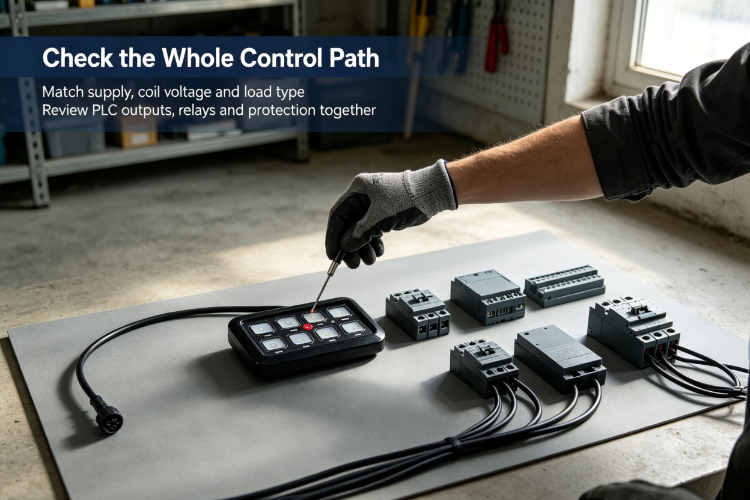
An Electric Solenoid Switch never works alone in a control panel. It interacts with the power supply, controller, protective devices, wiring and other switching parts. Check the whole control path.
| Panel Component | Compatibility Consideration |
|---|---|
| PLC Output Module | Output voltage, current capacity and load type |
| Power Supply | AC or DC output and available current |
| Relay | Coil voltage and contact configuration |
| Circuit Protection | Rated current and protection coordination |
| Terminal Blocks | Conductor size and connection requirements |
| Contactors | Control voltage and circuit arrangement |
Good coordination avoids needless trips and stoppages, and it makes maintenance easier. Reviewing these links during selection can also simplify wiring, installation and later replacement.
Common Selection Mistakes Can Affect Solenoid Switch Performance
A part can look like a perfect physical fit and still cause trouble if its electrical or mechanical specification is wrong.
Treating AC and DC Coils as Interchangeable
The two coil types behave differently. Feeding the wrong supply can cause excess current, weak magnetic force or a burnt coil. Verify the actual coil rating before you install anything.
Ignoring Operating Frequency and Voltage Conditions
An AC solenoid has to stay inside its stated frequency and voltage range. A DC model needs a compatible supply with reasonably stable voltage. Checking nominal voltage alone falls short.
Overlooking Heat Dissipation
Several energized components packed close together can push up the temperature inside an enclosure. Leave enough space and airflow, as the manufacturer instructs.
Selecting Components Without Checking the Connected Load
The contact rating has to suit the circuit being switched. A correct coil specification says nothing about whether the contacts can carry the load. Review the full switching requirement before approving a part.
Discuss Your Panel Control Components Requirements with Our Team
Choosing an Electric Solenoid Switch comes down to electrical compatibility, coil construction, switching performance and installation conditions. The part should fit the control circuit. It shouldn't be picked just for its appearance or its product category.
Industrial control panel projects involve many connected components, and we know that well. Our team can review your Electric Solenoid Switch requirements, check product specifications and help you find suitable Panel Control Components for different equipment setups.
When you send an inquiry, include:
- Required AC or DC supply
- Rated operating voltage and frequency
- Coil and contact specifications
- Installation dimensions and connection requirements
- Intended operating conditions
- Existing component model, if you are replacing an installed unit
Looking for an Electric Solenoid Switch for your industrial control panel? Contact our team to discuss your application requirements and explore suitable Panel Control Components for your project.
Related Products
Looking For Business Opportunity?
Request for a call today

No.128, Qianjin Road, Qianfeng Industrial Zone, Tangxia Town, Ruian, Zhejiang, China
-
-
Sophia Ye
-
Phone: +86-15305875100
-
WhatsApp: 15305875100
-
Email: [email protected]
-
- Mobile Terminal
Copyright 2024 Zhejiang Xiangrui Auto Electric Co., Ltd.

Relays And Modified Parts Factory
